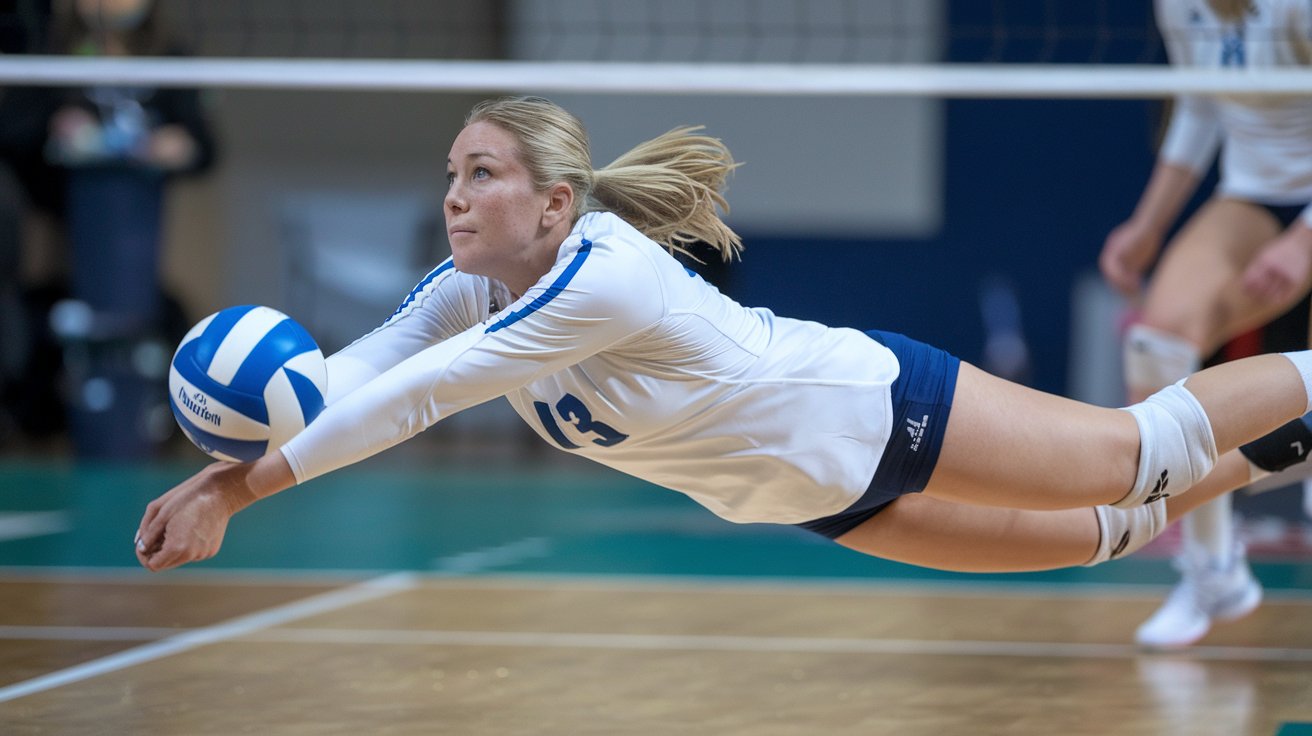
A libero in volleyball is a specialized defensive player who wears a different colored jersey and has unique rules governing their play. This position, introduced to enhance defensive play and rally length, cannot attack the ball above net height, serve in most leagues, or rotate to the front row. Understanding the libero position is essential for players, coaches, and fans wanting to grasp modern volleyball strategy and rules.
The Role and Responsibilities of a Libero
The libero’s primary job involves serving as the team’s defensive anchor, specializing in passing, digging, and setting from the back row. This player must excel at reading opposing attacks, positioning themselves optimally for digs, and delivering accurate passes to facilitate offensive plays. In the 2024-2025 season, successful liberos average 15-20 digs per match in competitive high school and college volleyball.
The libero position requires exceptional court awareness, quick reflexes, and superior ball control skills. Unlike other players who rotate through all positions, liberos focus exclusively on back-row play, allowing them to develop specialized defensive techniques. They often serve as the team’s primary communicator, calling out plays and directing teammates’ positioning during rallies.
Defensive Specialization and Court Coverage
Modern liberos cover approximately 60% of the back court during defensive plays, focusing on dig techniques and emergency saves that keep rallies alive. Their positioning strategy involves reading setter tendencies, anticipating attack angles, and communicating with middle and outside blockers to optimize defensive coverage schemes used throughout the 2025 season.
Serve Receive and Passing Excellence
In serve receive formations, the libero typically handles 40-50% of incoming serves, requiring consistent platform technique and precise target accuracy. Elite liberos maintain passing efficiency ratings above 2.3 on a 3.0 scale, with top college programs recruiting liberos who demonstrate exceptional serve receive skills under pressure situations.
Official Libero Rules and Regulations
The libero rules in volleyball include specific restrictions that distinguish this position from other players on the court. According to USA Volleyball and FIVB regulations updated for 2024-2025, liberos cannot serve in international play, though some youth and high school leagues allow serving from one rotational position. They must wear a contrasting jersey color and cannot participate in front-row play or blocking.
Substitution rules for liberos differ significantly from regular player substitutions. Libero replacements do not count toward team substitution limits, but the same libero must re-enter for the player they replaced. Teams may designate up to two liberos per match, though only one can be on court at any time during play.
Attack and Set Restrictions
The libero cannot attack any ball entirely above net height, whether from the front row, back row, or any other court position. When setting from the front zone (within the 10-foot line), teammates cannot attack the ball above net height, creating strategic considerations for offensive play calling and set selection in modern volleyball systems.
Serving Rules Across Different Levels
Libero serving rules vary by competitive level and governing body. In international and most college play, liberos cannot serve, while many high school and youth leagues permit serving from one specific rotational position. The 2024-2025 NFHS rules allow libero serving, creating development opportunities for well-rounded defensive specialists.
Why the Position is Called Libero
The term libero means ‘free’ in Italian, reflecting this player’s freedom from traditional rotation restrictions and specialized defensive role. Introduced internationally in 1996 and adopted by USA Volleyball in 1999, the name emphasizes the position’s liberation from front-row responsibilities and focus on back-row excellence.
The libero pronunciation follows Italian phonetics: LEE-beh-roh, with emphasis on the first syllable. This terminology has become standard across all volleyball-speaking countries, maintaining consistency in international competition and coaching education programs worldwide throughout the 2024-2025 season.
Physical and Mental Requirements
Successful liberos typically possess specific physical attributes that enhance their defensive capabilities. Elite liberos often measure between 5’4″ and 5’10”, providing optimal center of gravity for digging while maintaining sufficient reach for serve receive coverage. Quick lateral movement, flexibility, and exceptional hand-eye coordination represent crucial physical requirements for position success.
Mental toughness and game awareness separate good liberos from exceptional ones. The libero position demands constant communication, strategic thinking, and resilience after unsuccessful defensive attempts. Top college and professional liberos demonstrate remarkable consistency under pressure, maintaining focus during extended rallies and high-stakes competition throughout the 2025 season.
Training and Skill Development
Libero training programs emphasize ball control drills, reaction time exercises, and situational awareness development. Modern coaching methods incorporate video analysis, biomechanical assessment, and sport psychology techniques to maximize defensive potential and decision-making speed during competitive play.
Recruitment and College Opportunities
College volleyball programs actively recruit specialized liberos who demonstrate consistent statistical performance, leadership qualities, and academic excellence. Division I programs typically seek liberos with 3.5+ passing averages, 4.0+ digs per set, and proven ability to perform under pressure in championship-level competition.
Strategic Impact on Modern Volleyball
The libero position revolutionized volleyball strategy by extending rally length, increasing defensive opportunities, and creating more dynamic offensive possibilities. Statistical analysis from the 2024 season shows teams utilizing liberos effectively average 12% longer rallies and 18% higher defensive efficiency compared to historical pre-libero data.
Coaching strategies have evolved to maximize libero effectiveness through specialized rotation patterns, defensive systems, and offensive integration. Modern teams design plays specifically leveraging libero passing accuracy, creating faster offensive transitions and more diverse attack options throughout matches.
Libero Rules in Youth and Olympic Competition
Youth volleyball libero rules often provide modified regulations to encourage participation and skill development. Many junior programs allow liberos to serve, rotate more freely, and participate in front-row setting to build comprehensive volleyball understanding before specialization at higher competitive levels.
In Olympic volleyball competition, libero rules follow FIVB international standards, requiring strict adherence to position restrictions and substitution protocols. The 2024 Paris Olympics showcased exceptional libero play, with defensive specialists recording match-high dig totals and game-changing defensive sequences throughout tournament play.
Related video about what is a libero in volleyball
This video complements the article information with a practical visual demonstration.
Your questions answered
What is the job of a libero in volleyball?
The libero’s primary job is to serve as the team’s defensive specialist, focusing on passing, digging, and back-row play. They handle serve receive, make defensive saves, and communicate with teammates while wearing a contrasting jersey color. Liberos cannot attack above net height, block, or typically serve, depending on the competition level.
Why is libero not allowed to serve?
In international and most college volleyball, liberos cannot serve because their role is specialized for defense only. This rule maintains competitive balance by preventing teams from having a player who excels in both serving and defensive skills. However, some youth and high school leagues do allow libero serving from one rotational position.
What is so special about a libero in volleyball?
Liberos are special because they operate under unique rules that allow unlimited substitutions, wear different colored jerseys, and focus exclusively on defensive play. They don’t count against substitution limits, can enter and exit freely for back-row players, and often serve as the team’s defensive anchor and primary communicator during matches.
Why do they call it libero?
The term libero comes from Italian, meaning ‘free,’ which reflects the position’s freedom from traditional rotation restrictions and front-row responsibilities. Introduced internationally in 1996, the name emphasizes how this player is liberated from attacking duties to focus exclusively on defensive specialization and back-row excellence.
Can a libero attack the ball in volleyball?
No, liberos cannot attack any ball that is entirely above the net height, regardless of their court position. Additionally, when a libero sets the ball from the front zone, their teammates cannot attack that set above net height. This restriction ensures liberos remain focused on their defensive specialization role.
How many liberos can be on the court at once?
Only one libero can be on the court at any time during play. Teams may designate up to two liberos per match, but they cannot be on court simultaneously. Libero substitutions don’t count toward regular substitution limits, and the same libero who exits must be the one to re-enter for that player.
| Key Aspect | Important Details | Benefit |
|---|---|---|
| Primary Role | Defensive specialist in contrasting jersey | Enhanced team defense and rally length |
| Substitution Rules | Unlimited exchanges, doesn’t count toward limits | Strategic flexibility and fresh legs |
| Attack Restrictions | Cannot attack balls above net height | Maintains defensive specialization focus |
| Court Coverage | Covers 60% of back court during defense | Improved dig efficiency and ball control |
| Communication | Primary court communicator and leader | Better team coordination and strategy |