
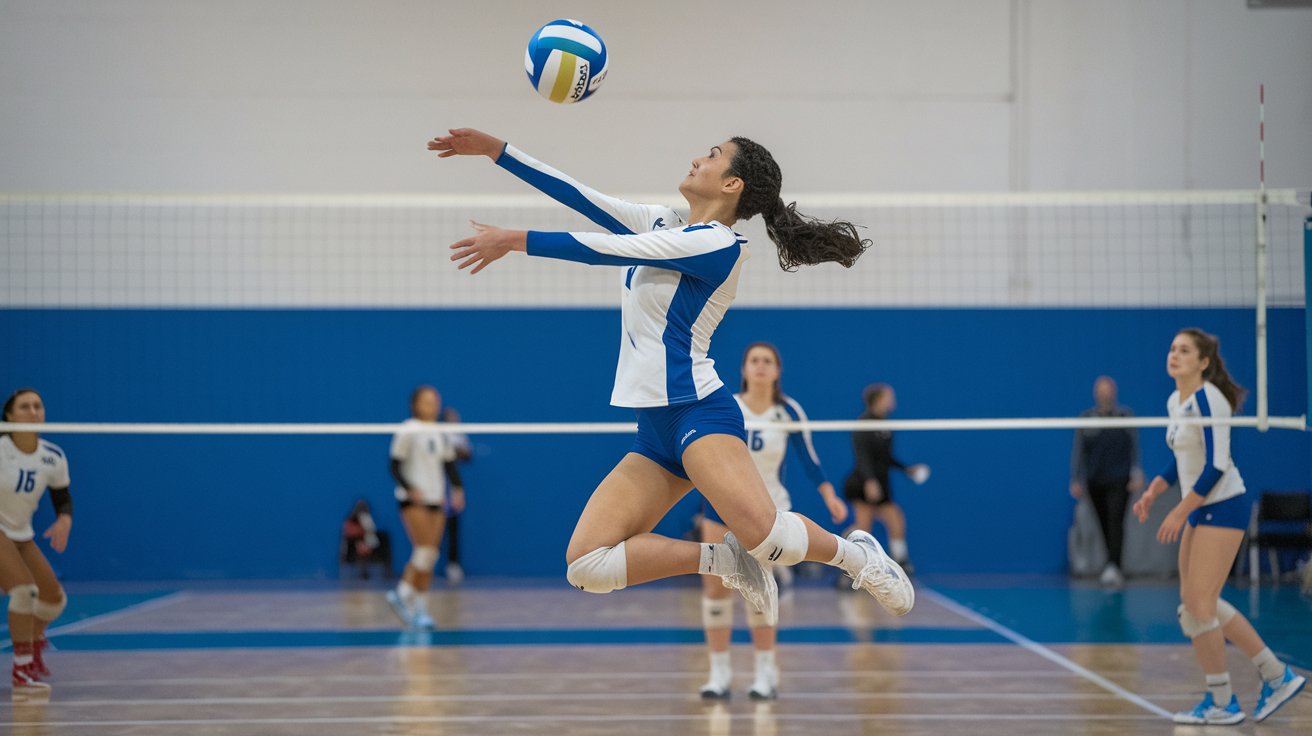
Learning how to set a volleyball is fundamental for any player looking to master this crucial skill. A proper volleyball set creates scoring opportunities by positioning the ball perfectly for attackers. This comprehensive guide covers essential techniques, hand positioning, common mistakes, and proven drills to help you develop consistent, accurate setting skills that will elevate your game on the court.
What is a Volleyball Set and Why It Matters
A volleyball set is the second contact in a typical three-hit sequence, designed to position the ball optimally for an attacking player. The setter acts as the team’s quarterback, directing the offense by delivering precise, consistent passes to hitters. Proper setting technique determines whether your team can execute powerful attacks or struggles with poorly placed balls that result in weak offensive plays.
In competitive volleyball across the United States, effective setting accounts for approximately 60% of successful offensive plays according to 2024 USA Volleyball statistics. The set must be delivered with the right height, speed, and placement to give attackers the best chance to score points against the opposing team’s defense.
Essential Hand Position for Volleyball Setting
Mastering the proper hand position is the foundation of excellent volleyball setting. Your hands should form a triangle or diamond shape above your forehead, with thumbs pointing down and fingers spread wide. The hand position creates a natural pocket that cradles the ball during contact, ensuring clean and controlled ball handling.
Position your hands approximately 6-8 inches above your forehead with elbows bent at roughly 90 degrees. Your fingertips should be the primary contact points with the ball, while your palms remain slightly curved but not touching the volleyball. This volleyball hand position allows for maximum control and prevents illegal ball handling calls from referees in organized play.
Step-by-Step Volleyball Setting Technique
Perfect volleyball setting technique requires coordinated movement of your entire body, not just your hands and arms. Begin with a balanced athletic stance, feet shoulder-width apart, with your right foot slightly ahead of your left foot for right-handed setters. Keep your knees slightly bent and weight distributed evenly on the balls of your feet for quick movement in any direction.
Body Positioning and Footwork
Proper body positioning starts with getting your body underneath the ball as quickly as possible. Use short, quick steps to position yourself so the ball drops directly above your forehead. Your shoulders should face your intended target, and your core should remain stable throughout the setting motion. Footwork is crucial for consistent setting, as poor positioning leads to off-balance sets that are difficult for hitters to attack effectively.
Ball Contact and Release
The ball contact phase should be brief but controlled, lasting approximately 0.1 seconds according to biomechanical studies. Contact the ball with your fingertips spread across its surface, creating multiple contact points for stability. Push through with your legs, extend your arms upward, and follow through toward your target. The release should be smooth and consistent, with equal pressure from both hands to ensure straight ball flight.
Types of Volleyball Sets and When to Use Them
Understanding different types of volleyball setting allows you to vary your offensive strategy and keep opponents guessing. The most common sets include the high outside set (4-ball), quick middle set (1-ball), and back row attack set (pipe). Each set serves a specific purpose and requires different timing and placement to be effective in game situations.
The 4-ball set is delivered high and outside, giving hitters time to approach and attack from various angles. Quick sets like the 1-ball require precise timing between setter and middle attacker, creating fast-paced offensive opportunities. Back row sets enable attacks from behind the 10-foot line, adding another dimension to your team’s offensive arsenal.
Common Volleyball Setting Mistakes to Avoid
Many players struggle with common setting mistakes that can be easily corrected with proper practice and awareness. Understanding these errors helps you develop better technique and avoid bad habits that are difficult to break later in your volleyball development.
Pushing or Carrying the Ball
Pushing the ball or carrying occurs when setters hold the ball too long or use their palms instead of fingertips for contact. This illegal technique results in ball handling violations and gives possession to the opposing team. Focus on quick, clean contact with your fingertips spread wide, and practice the proper catch-and-release motion to eliminate pushing tendencies from your setting technique.
Poor Footwork and Body Position
Poor footwork leads to off-balance sets that are difficult for attackers to convert into points. Many beginners fail to get their body underneath the ball, forcing them to reach awkwardly and compromising their setting accuracy. Practice moving your feet quickly to achieve proper position, and focus on keeping your shoulders square to your intended target throughout the setting motion.
How Far Off the Net Should a Volleyball Be Set
The optimal distance off the net for volleyball sets depends on the type of attack and hitter preference, but generally ranges from 1-4 feet from the net. Outside sets should typically be placed 2-3 feet off the net to give hitters room to approach at various angles and avoid net violations. Middle quick sets can be closer to the net, around 1-2 feet, to maximize the speed of the attack.
Setting too close to the net increases the risk of net violations and limits attacking angles, while sets placed too far off the net make it easier for blockers to defend. According to 2024 collegiate volleyball analysis, sets positioned 2.5-3 feet off the net result in the highest attack efficiency rates among Division I teams across the United States.
Volleyball Setting Systems: 4-2, 6-2, and 5-1 Formations
Understanding volleyball setting systems is crucial for team strategy and rotation management. The 4-2 system uses two setters who also attack, providing six potential attackers but limiting setting specialization. This system works well for beginner and intermediate teams developing multiple players’ setting skills.
The 6-2 formation employs two setters who only set when in the back row, creating three front-row attackers at all times. The 5-1 system features one primary setter throughout all rotations, offering consistency but sometimes limiting offensive options when the setter is front row. Each system has advantages depending on team skill level and strategic preferences in competitive volleyball play.
How to Set a Volleyball for Beginners
Learning how to set a volleyball for beginners starts with mastering basic fundamentals before progressing to advanced techniques. Begin by practicing hand shape and ball contact against a wall, focusing on consistent finger positioning and gentle ball control. Beginner setters should prioritize accuracy over speed, developing muscle memory through repetitive practice sessions.
Start with stationary setting drills, gradually progressing to moving sets and different target heights. Practice setting to yourself repeatedly, aiming for consistent height and placement. Beginning volleyball players should focus on getting comfortable with ball handling before worrying about complex offensive systems or quick sets that require advanced timing and coordination skills.
Advanced Setting Drills for Skill Development
Developing consistent setting skills requires structured practice through proven drills that challenge different aspects of technique. Wall setting drills build hand strength and consistency by having players set continuously against a wall, focusing on proper form and ball control. This drill helps develop the muscle memory necessary for clean, consistent ball handling in game situations.
Target Practice and Accuracy Drills
Target practice improves setting precision by having players aim for specific zones on the court from various positions. Set up hula hoops or cones at different locations and heights, practicing sets from both stationary and moving positions. Accuracy drills should progress from short distances to full-court setting, incorporating game-like scenarios with approaching hitters and defensive pressure.
Setting Under Pressure Situations
Game-realistic pressure situations prepare setters for competitive play where perfect passes are rare. Practice setting from awkward positions, off-balance situations, and with approaching blockers to simulate actual match conditions. Pressure drills should include setting with limited time, multiple ball contacts, and various court positions to develop adaptability and decision-making skills under stress.
How to Set a Volleyball Without Making Noise
Learning how to set a volleyball without noise indicates proper technique and soft hands, essential for clean ball handling. Noisy sets typically result from improper contact, using palms instead of fingertips, or rushing the setting motion. Quiet setting demonstrates good ball control and reduces the likelihood of ball handling violations called by referees.
Focus on cushioning the ball’s impact with slightly bent fingers and wrists, absorbing its energy before redirecting it toward your target. Practice with lighter touches and longer contact time within legal limits. Silent sets also help in tactical situations where you want to disguise your intended target from opposing blockers and defensive players.
Related video about how to set a volleyball
This video complements the article information with a practical visual demonstration.
Questions & Answers
What is the proper way to set a volleyball?
The proper way to set a volleyball involves positioning your hands in a triangle shape above your forehead, contacting the ball with fingertips spread wide, and pushing through with your legs while extending arms upward. Keep your body balanced underneath the ball and follow through toward your intended target for consistent, accurate sets.
How far off the net should a volleyball be set?
Volleyball sets should typically be placed 2-3 feet off the net for outside attacks, allowing hitters proper approach angles while avoiding net violations. Middle quick sets can be 1-2 feet off the net, while back row sets require greater distance. The exact placement depends on the hitter’s preference and attack strategy.
What is 4-2, 6-2, and 5-1 in volleyball?
These numbers represent volleyball setting systems. 4-2 uses four attackers and two setters who also attack. 6-2 employs six attackers with two setters who only set from back row positions. 5-1 features five attackers and one primary setter throughout all rotations, offering the most consistency in setting.
How do sets work in volleyball?
Volleyball sets are the second contact in a three-hit sequence, designed to position the ball for attackers. The setter receives the pass, processes the game situation, and delivers the ball to the best available attacker. Different set heights, speeds, and locations create various offensive opportunities and keep opponents guessing.
What is a 3 set in volleyball?
A 3 set is a medium-height set delivered to the right side of the court, typically 6-8 feet high and placed about 3 feet off the net. This set gives right-side attackers time to approach while still maintaining offensive tempo, commonly used when the pass is not perfect for quicker offensive options.
How can beginners improve their volleyball setting?
Beginners should focus on proper hand positioning, consistent ball contact with fingertips, and repetitive wall setting drills. Practice stationary setting before moving to dynamic situations, prioritize accuracy over speed, and gradually progress to game-like scenarios with approaching hitters and defensive pressure.
| Setting Element | Key Technique | Performance Benefit |
|---|---|---|
| Hand Position | Triangle shape above forehead with fingertip contact | Clean ball handling and accurate placement |
| Body Position | Balanced stance underneath the ball | Consistent setting accuracy and power |
| Ball Contact | Brief fingertip contact with follow-through | Legal ball handling and precise direction |
| Set Distance | 2-3 feet off net for outside attacks | Optimal attacking angles and net clearance |
| Practice Method | Wall drills and target accuracy training | Rapid skill development and muscle memory |
Pingback: Building Stronger Volleyball Skills Through Smart Practice and Recovery - Set Up For Volleyball