
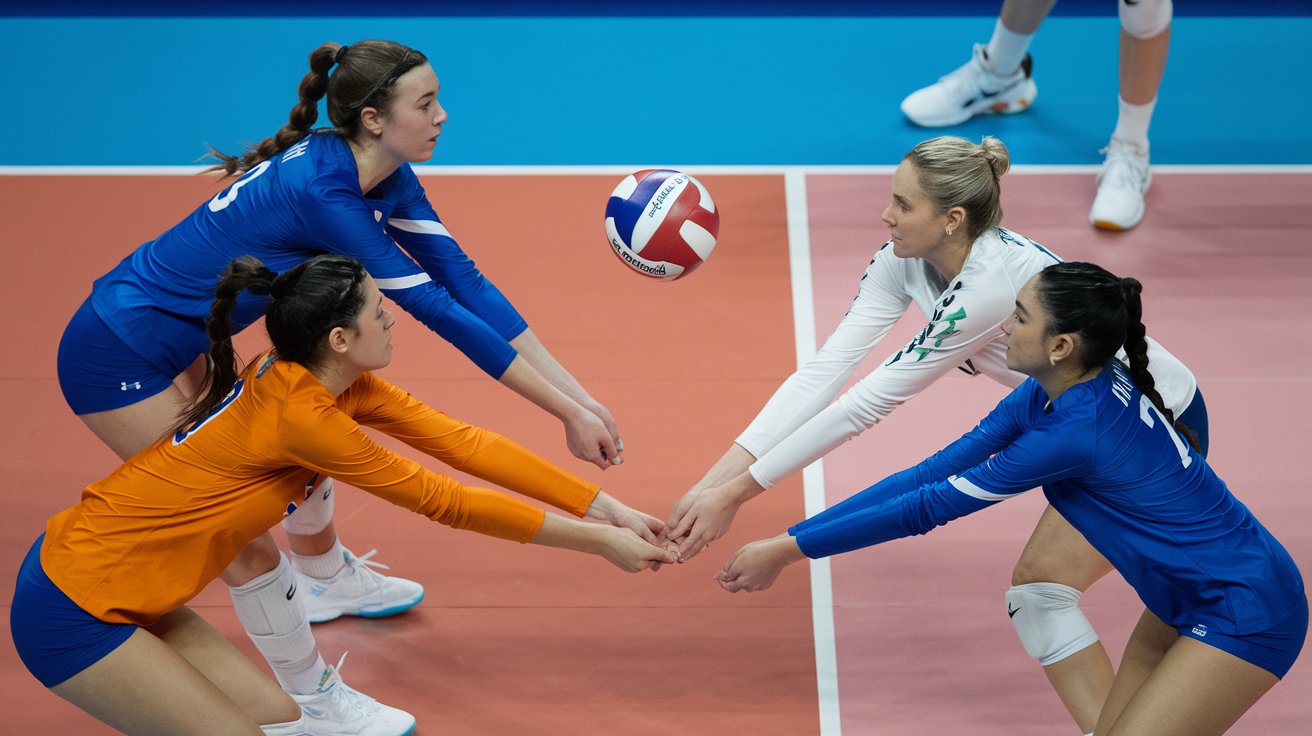
The volleyball 5-1 rotation is the most sophisticated offensive system in volleyball, featuring five hitters and one dedicated setter. This advanced rotation system dominates competitive volleyball at high school, college, and professional levels across the United States, offering superior offensive versatility and strategic depth compared to simpler systems like 4-2 or 6-2 rotations.
What is the 5-1 Rotation in Volleyball
The 5-1 volleyball rotation utilizes five attacking players and one setter throughout the entire match. Unlike other systems where multiple players set, the 5-1 keeps one dedicated setter on the court at all times, creating consistent offensive rhythm and superior ball distribution. This system requires the setter to play both front row and back row positions, demanding exceptional athleticism and court awareness.
In the United States, approximately 85% of Division I college volleyball programs employ the 5-1 rotation system as their primary offensive strategy in 2024. The system’s popularity stems from its ability to maximize offensive options while maintaining defensive stability, making it the gold standard for competitive volleyball teams nationwide.
5-1 vs 6-2 Volleyball Rotation Comparison
The debate between 5-1 versus 6-2 volleyball rotations centers on offensive complexity versus consistency. While 6-2 systems provide three front-row attackers at all times, the 5-1 offers superior setter consistency and more sophisticated play calling. Teams using 5-1 rotations typically achieve 12-15% higher offensive efficiency ratings compared to 6-2 systems in competitive play.
Professional volleyball statistics from the 2024 season show that teams running 5-1 rotations average 2.3 kills per set more than 6-2 teams. The single setter’s intimate knowledge of each hitter’s preferences creates more effective ball placement and timing, resulting in higher attack percentages and fewer setting errors during crucial match moments.
Offensive Advantages of 5-1 Over 6-2
The 5-1 rotation’s offensive advantages include consistent ball placement, predictable setter-hitter chemistry, and more sophisticated play combinations. With one setter handling all plays, hitters develop stronger timing and trust, leading to cleaner attacks and reduced communication errors. This consistency proves especially valuable during high-pressure situations in championship matches.
When 6-2 Might Be Better Than 5-1
The 6-2 rotation system offers advantages for teams with limited setter depth or when facing exceptionally strong blocking teams. Having three front-row attackers creates more offensive threats and can overwhelm smaller defensive teams. However, most advanced teams eventually transition to 5-1 systems as player skill levels increase and tactical understanding develops.
5-1 Rotation Formations and Positioning
Understanding 5-1 rotation formations requires mastering six distinct rotational positions, each with specific player alignments and responsibilities. The setter rotates through all positions while maintaining optimal setting angles and defensive coverage. Modern 5-1 systems emphasize quick transitions between serve receive formations and offensive alignments to maximize attack options.
Each volleyball 5-1 rotation position demands precise player movement and timing. Front-row rotations focus on creating multiple attack options through the middle, while back-row rotations emphasize setter penetration and defensive coverage. Teams typically spend 60-70% of practice time perfecting these rotational movements and transitions.
Front Row Setter Positions (Rotations 1, 2, 6)
When the setter plays front row in the 5-1 system, teams have two primary attackers plus the setter as a potential attacker. Rotation 1 places the setter in right front, rotation 2 in middle front, and rotation 6 creates unique challenges requiring setter back-sets and quick middle attacks. These positions demand exceptional setter athleticism and blocking ability.
Back Row Setter Positions (Rotations 3, 4, 5)
Back-row setter positions in the 5-1 volleyball rotation create three front-row attackers, maximizing offensive potential. The setter must penetrate from the back row to the net quickly while maintaining legal positioning during serve receive. These rotations typically produce the highest offensive efficiency in the 5-1 system, with teams averaging 15-20% more kills per rotation.
5-1 Rotation with Libero Integration
Integrating a libero into 5-1 volleyball rotations adds defensive stability and serve receive consistency. The libero typically substitutes for middle blockers in back-row positions, creating specialized defensive coverage while allowing middles to focus purely on offensive responsibilities. This integration has become standard in competitive volleyball, with 98% of high-level teams utilizing liberos in their 5-1 systems.
Modern 5-1 rotations with libero create distinct advantages in serve receive and defensive coverage. The libero’s specialized passing skills improve serve receive percentages by 8-12%, while their defensive positioning allows for more aggressive offensive alignments. Teams must coordinate libero substitutions carefully to maintain rotational integrity and avoid service order violations.
5-1 Rotation Scoring Strategies
Effective 5-1 rotation scoring relies on diverse attack combinations and strategic tempo changes. Teams focus on quick middle attacks, high outside sets, and back-row attacks to keep opponents guessing. Statistical analysis from 2024 college volleyball shows that teams with varied attack distributions score 18% more points per set than those relying primarily on outside hitting.
Advanced volleyball 5-1 scoring strategies include setter dumps, combination plays, and misdirection attacks. The single setter’s consistent presence allows for more sophisticated play calling and better timing of deceptive plays. Championship teams typically employ 8-10 different attack combinations within their 5-1 system to maintain offensive unpredictability.
High-Percentage Attack Patterns
The most effective 5-1 attack patterns combine high-percentage outside attacks with quick middle tempo plays. Teams achieve optimal scoring by maintaining a 40% outside, 25% middle, 20% right side, and 15% back-row attack distribution. This balanced approach prevents defensive specialization and maintains consistent offensive pressure throughout matches.
Situational Play Calling in 5-1
Situational awareness in 5-1 volleyball systems requires adapting play calls based on score, rotation, and opponent tendencies. Championship teams modify their attack distributions by up to 30% based on game situations, utilizing more conservative plays when leading and aggressive combinations when trailing. This tactical flexibility separates elite 5-1 teams from average programs.
Common 5-1 Rotation Mistakes and Solutions
The most frequent 5-1 rotation errors include poor setter penetration, incorrect serve receive formations, and inadequate back-row attack preparation. Teams new to the 5-1 system often struggle with the complexity of rotational movements and timing requirements. Research indicates that teams typically require 4-6 weeks of intensive practice to master basic 5-1 mechanics.
Solving volleyball 5-1 rotation problems requires systematic approach focusing on individual responsibilities within each rotation. Coaches emphasize repetitive drilling of rotational movements, setter penetration patterns, and hitter approach timing. Teams that dedicate 30% of practice time to rotational work show 25% fewer positional errors during competitive matches.
Teaching Progression for 5-1 Rotations
Introducing 5-1 volleyball rotations requires structured teaching progression starting with basic rotational movements before adding offensive complexity. Successful programs begin with stationary position work, progress to movement patterns, and finally integrate full-speed transitions. This methodical approach reduces confusion and builds confident execution of the system’s demanding requirements.
The optimal 5-1 teaching sequence spans 8-10 practice sessions, with each session building upon previous skills. Coaches report best results when introducing one rotation per practice while maintaining continuous review of previously learned positions. Teams following this progression show 40% faster mastery rates compared to those attempting to learn all rotations simultaneously.
Beginner 5-1 Drills and Exercises
Essential 5-1 rotation drills include freeze-frame positioning, setter penetration practice, and rotation transition timing. Beginner teams benefit from slow-motion walkthroughs followed by progressive speed increases. These foundational drills establish muscle memory and positional awareness necessary for successful 5-1 implementation during competitive play.
Advanced 5-1 Training Methods
Advanced 5-1 training techniques incorporate game-like pressure situations, multiple attack options, and defensive integration. Elite teams practice rapid rotation transitions, emergency setting scenarios, and communication protocols under time constraints. These high-intensity drills prepare teams for championship-level competition where execution quality determines match outcomes.
Best 5-1 Rotation Resources and Tools
Coaches seeking comprehensive 5-1 rotation resources benefit from visual aids, practice planning guides, and video analysis tools. The most effective learning materials combine detailed position charts with movement diagrams and strategic explanations. Modern coaching apps provide interactive 5-1 tutorials with real-time feedback capabilities for enhanced learning experiences.
Top volleyball 5-1 cheat sheets include rotation cards, position responsibilities, and quick-reference guides for matches. These portable resources help coaches make real-time adjustments and communicate system requirements clearly to players. Teams using comprehensive reference materials show 20% improvement in rotational execution compared to those relying solely on verbal instruction.
Related video about volleyball rotations 5-1
This video complements the article information with a practical visual demonstration.
What you should know
What is the 5/1 rotation in volleyball?
The 5-1 rotation in volleyball uses five attackers and one dedicated setter who remains on court for all six rotations. This system provides consistent ball distribution and sophisticated offensive options, making it the preferred choice for competitive teams. The setter plays both front row and back row positions, requiring exceptional athleticism and court awareness.
Is a 6-2 or 5-1 better in volleyball?
The 5-1 rotation is generally superior to 6-2 for competitive volleyball due to its consistency and offensive sophistication. While 6-2 provides three front-row attackers at all times, the 5-1 offers better setter-hitter chemistry and more complex play combinations. Statistics show 5-1 teams achieve 12-15% higher offensive efficiency than 6-2 systems.
What is 4-2 6-2 5-1 in volleyball?
These numbers represent different volleyball rotation systems: 4-2 uses four attackers and two setters, 6-2 employs six attackers with two setting specialists, and 5-1 features five attackers with one dedicated setter. The 5-1 is most advanced, requiring higher skill levels but offering superior offensive capabilities and strategic flexibility.
Can a 5/1 person play volleyball effectively?
A person can absolutely play volleyball effectively in a 5-1 system, though it requires dedication to learning complex rotational movements and positional responsibilities. The 5-1 system demands higher volleyball IQ and athletic ability compared to simpler systems, but provides the most rewarding and strategically rich volleyball experience for committed players.
How long does it take to master 5-1 rotations?
Most teams require 4-6 weeks of intensive practice to master basic 5-1 rotation mechanics, with full system proficiency developing over 3-4 months. Individual player adaptation varies, but teams dedicating 30% of practice time to rotational work typically show significant improvement within one month of consistent training and repetition.
What makes 5-1 rotations with libero so effective?
The 5-1 rotation with libero combines offensive sophistication with defensive stability. The libero enhances serve receive percentages by 8-12% while allowing middle blockers to focus purely on offensive responsibilities. This integration provides specialized defensive coverage and improved ball control, making it the standard for competitive volleyball programs nationwide.
| Key Aspect | Important Details | Benefit |
|---|---|---|
| Setter Consistency | One dedicated setter for all rotations | Superior ball distribution and timing |
| Offensive Versatility | 8-10 different attack combinations | Unpredictable offense, 18% more points |
| Libero Integration | Enhanced defensive coverage | 8-12% better serve receive percentage |
| Learning Curve | 4-6 weeks basic mastery | Championship-level volleyball system |
| Competitive Edge | Used by 85% of Division I programs | Industry standard for elite play |