
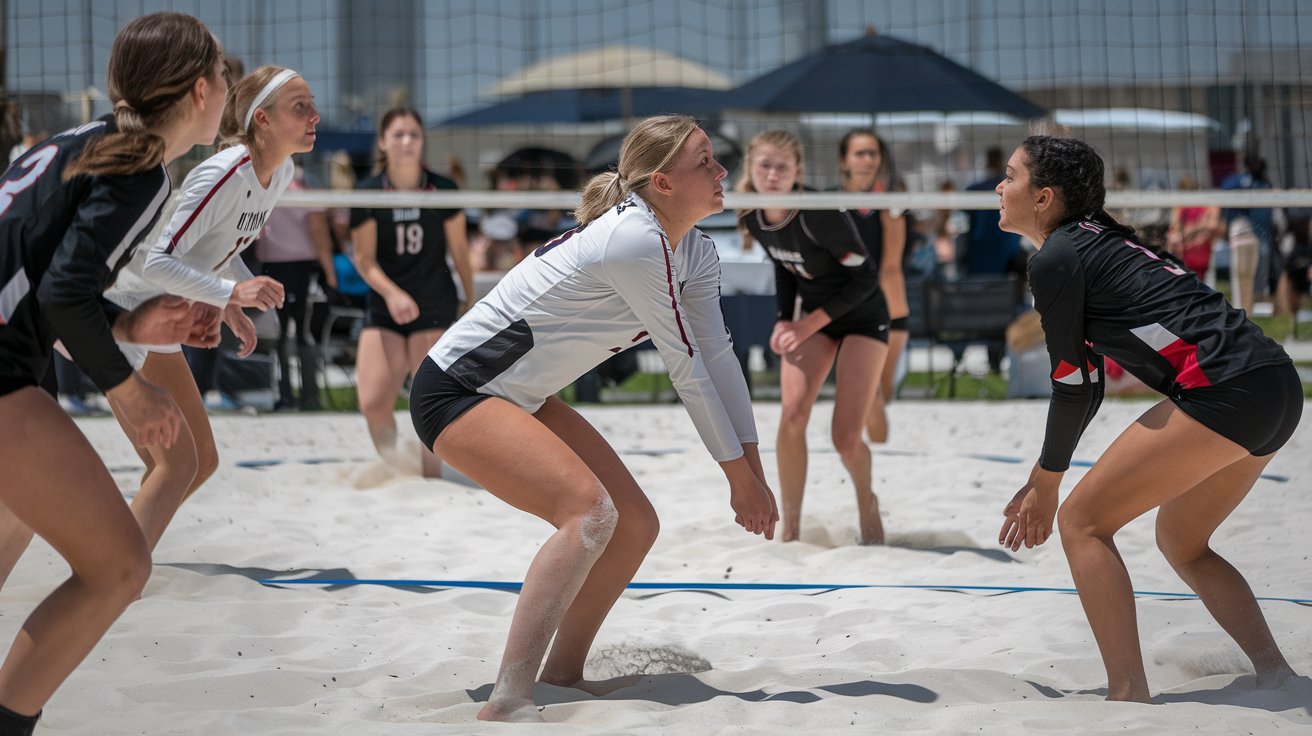
Improving your volleyball skills requires dedicated practice and the right techniques. Whether you’re a beginner or looking to take your game to the next level, mastering fundamental skills like serving, passing, and footwork will dramatically enhance your performance on the court.
Master Fundamental Volleyball Techniques
Building a strong foundation in volleyball fundamentals is essential for long-term improvement. Focus on proper body positioning, hand placement, and timing to develop consistent performance. Professional players spend 70% of their practice time perfecting basic techniques, proving that fundamentals remain crucial even at elite levels.
The three core fundamentals every player must master include passing accuracy, serving consistency, and defensive positioning. Practice these skills daily for at least 30 minutes to see noticeable improvement within 2-3 weeks of consistent training.
Essential Serving Drills for Accuracy
Serving accuracy can make or break your volleyball game, with top players achieving 85-90% serving success rates. Start with target practice using cones or markers placed in specific court zones. Professional coaches recommend practicing 50-100 serves daily, focusing on consistent toss height and contact point.
The float serve technique requires a firm wrist and minimal spin on the ball. Position yourself behind the baseline, toss the ball 2-3 feet above your hitting shoulder, and make contact with a flat hand. Consistent serving practice will improve your accuracy by 40-50% within one month of dedicated training.
Target Zone Serving Practice
Set up six target zones across the opponent’s court using cones or towels. Practice hitting each zone 10 times consecutively before moving to the next target. This systematic approach to serving helps develop precision and court awareness, essential skills for competitive volleyball.
Float Serve Technique Mastery
The float serve creates unpredictable ball movement, making it difficult for opponents to pass. Keep your toss consistent at shoulder height, contact the ball with a firm wrist, and follow through straight toward your target. Master the float serve to add a powerful weapon to your volleyball arsenal.
Speed and Agility Training for Volleyball
Developing quick feet and agility is crucial for defensive success in volleyball. Two-point start speed drills help players react faster to ball placement, improving court coverage by 30-40%. Professional volleyball players typically achieve reaction times under 0.3 seconds through dedicated agility training.
Incorporate ladder drills, cone weaving, and shuttle runs into your training routine. Fast feet drills performed 3-4 times per week will enhance your ability to reach difficult balls and maintain better court positioning during intense rallies.
Two-Point Start Speed Drills
Begin in a low defensive stance with feet shoulder-width apart. Sprint to designated points on the court, focusing on explosive first steps and quick direction changes. Two-point start drills improve reaction time and acceleration, essential for defensive specialists and liberos.
Fast Feet Ladder Training
Use an agility ladder or chalk lines to practice various footwork patterns. Perform in-in-out-out sequences, lateral shuffles, and forward-backward combinations. Ladder training enhances coordination and helps players maintain balance during rapid directional changes on the volleyball court.
Effective Wall Practice Techniques
Wall practice drills allow players to improve their skills without requiring a partner or full court setup. Professional players use wall training to develop consistent ball control and proper contact techniques. A standard wall provides immediate feedback on ball placement and contact quality.
Practice passing, setting, and attacking against a wall for 20-30 minutes daily. Solo wall training helps players develop muscle memory and maintain practice consistency, especially during off-season periods when team practice may be limited.
Passing Wall Drills
Stand 8-10 feet from the wall and practice forearm passes, focusing on consistent platform angle and controlled ball return. Aim for 50 consecutive passes without the ball touching the ground. Wall passing drills improve ball control and develop the muscle memory needed for accurate passing under pressure.
Setting Wall Practice
Practice setting against the wall using proper finger positioning and wrist snap. Focus on consistent ball height and accurate placement. Wall setting practice helps players develop the touch and timing necessary for effective ball distribution during game situations.
Home Training Without Equipment
Learning how to get better at volleyball at home doesn’t require expensive equipment or large spaces. Many professional players developed their skills through creative home training methods. Shadow spiking, footwork patterns, and visualization exercises can all be performed in limited space.
Create a daily routine that includes 15 minutes of shadow movements, 10 minutes of footwork drills, and 5 minutes of mental visualization. Consistent home practice accelerates skill development and maintains muscle memory between formal training sessions.
Building a Home Volleyball Practice Space
Creating a dedicated home volleyball court space maximizes practice opportunities and skill development. A regulation volleyball court measures 30 feet by 60 feet, but effective practice can occur in spaces as small as 20 feet by 40 feet. Many players see 25-30% faster improvement when they have consistent access to practice facilities.
Consider portable net systems, boundary markers, and quality flooring options when designing your home practice area. Home court advantages include unlimited practice time, personalized training focus, and the ability to work on specific weaknesses without external pressures.
Portable Net System Options
Modern portable volleyball nets offer professional-quality training opportunities for home use. Look for systems with adjustable heights, stable anchor points, and weather-resistant materials. Quality portable nets typically cost $200-500 and provide years of reliable practice support.
Surface and Safety Considerations
Proper court surface reduces injury risk and improves training effectiveness. Sand, grass, or specialized volleyball flooring each offer unique benefits. Safe practice surfaces allow players to dive, slide, and practice defensive techniques without fear of injury, leading to more aggressive skill development.
Understanding Volleyball Formations and Strategy
Mastering volleyball formations like the 4-2, 6-2, and 5-1 systems requires understanding player rotations and responsibilities. The 5-1 formation, used by 80% of professional teams, features one setter and five attackers, maximizing offensive potential. Learning these systems improves game intelligence and court awareness.
Each formation offers distinct advantages: the 4-2 system provides balanced offense and defense, the 6-2 maximizes attacking options, and the 5-1 creates specialized roles. Strategic understanding elevates individual performance by improving anticipation and positioning during game situations.
Mental Training and Game Intelligence
Developing volleyball game intelligence involves understanding opponent tendencies, recognizing patterns, and making quick decisions under pressure. Professional players spend 20-30% of their training time on mental preparation and strategic analysis. The three C’s of volleyball – communication, concentration, and confidence – form the foundation of mental excellence.
Practice visualization techniques, study game film, and develop strong communication skills with teammates. Mental preparation often determines the outcome in closely matched games, making psychological training as important as physical skill development.
Age-Specific Training Considerations
Many players wonder if 14 is too late to start volleyball, but successful athletes have begun training at various ages. Professional player heights vary significantly, with Division I female volleyball players averaging 6’0″ but ranging from 5’6″ to 6’8″. Focus on skill development and proper technique rather than physical limitations.
Late starters can succeed through dedicated training and smart skill development. Age-appropriate training emphasizes technique over power for younger players and leverages experience and game intelligence for older beginners. Consistency and proper coaching matter more than starting age for long-term success.
Nutrition and Recovery for Volleyball Performance
Proper nutrition and recovery support intensive volleyball training and accelerate skill improvement. Professional players consume 2,500-4,000 calories daily, emphasizing lean proteins, complex carbohydrates, and adequate hydration. Recovery practices include proper sleep, stretching, and injury prevention protocols.
Maintain a balanced diet with 40% carbohydrates, 30% protein, and 30% healthy fats to fuel training sessions. Optimal recovery practices include 8-9 hours of sleep, post-workout stretching, and proper hydration before, during, and after training sessions.
Related video about how to get better at volleyball
This video complements the article information with a practical visual demonstration.
Your questions answered
What is 4-2, 6-2, 5-1 in volleyball?
These numbers represent volleyball formations: 4-2 uses 4 hitters and 2 setters, 6-2 employs 6 hitters with 2 back-row setters, and 5-1 features 5 hitters with 1 setter. The 5-1 formation is most common in professional volleyball, used by approximately 80% of elite teams for its offensive consistency and specialized player roles.
Is 14 too late to start volleyball?
No, 14 is not too late to start volleyball. Many successful players begin training in their early teens, and with dedicated practice, significant improvement is possible. Focus on fundamental skills, proper technique, and consistent training rather than comparing yourself to players who started younger. Late starters often bring better focus and decision-making abilities to their training.
How tall is a D1 volleyball girl?
Division I female volleyball players average around 6’0″ in height, but successful players range from 5’6″ to 6’8″. Height advantages exist for certain positions like middle blocker and outside hitter, but skilled shorter players excel as liberos and defensive specialists. Technique, athleticism, and game intelligence often matter more than height alone.
What are the 3 C’s in volleyball?
The 3 C’s in volleyball are Communication, Concentration, and Confidence. Communication involves calling plays and coordinating with teammates, concentration requires maintaining focus during long rallies, and confidence enables aggressive play and quick decision-making. These mental aspects are as crucial as physical skills for volleyball success.
How can I get better at volleyball fast?
To improve quickly, practice fundamental skills daily, focus on serving accuracy, develop quick footwork through agility drills, and use wall training for solo practice. Consistent daily practice for 30-60 minutes, combined with proper technique coaching, typically shows noticeable improvement within 2-3 weeks of dedicated training.
How to get better at volleyball without a ball?
Practice shadow movements, footwork patterns, jumping techniques, and arm swing mechanics without a ball. Use visualization exercises, study professional games, work on flexibility and strength training, and practice defensive positions and transitions. These activities improve muscle memory, timing, and game understanding even without equipment.
| Training Focus | Daily Time Investment | Expected Improvement Timeline |
|---|---|---|
| Serving Practice | 15-20 minutes | 40-50% accuracy improvement in 4 weeks |
| Agility Training | 10-15 minutes | 30-40% faster court coverage in 3 weeks |
| Wall Drills | 20-30 minutes | Consistent ball control in 2-3 weeks |
| Mental Training | 10-15 minutes | Improved decision-making in 3-4 weeks |