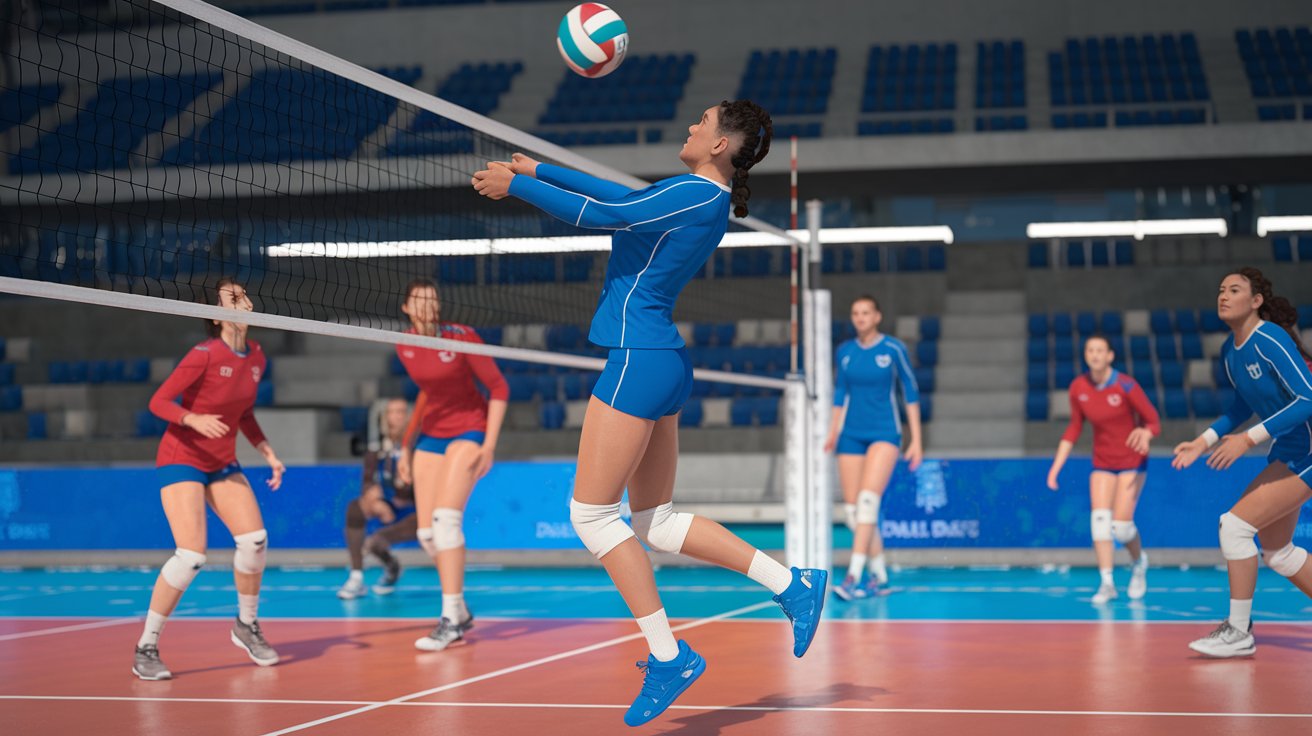
Understanding volleyball positions on court is essential for players, coaches, and fans wanting to master the game. The six primary positions each have unique responsibilities, from the strategic setter orchestrating plays to the defensive libero protecting the back row. This comprehensive guide covers every position, rotation system, and role to help you dominate the court in 2025.
The 6 Essential Volleyball Positions on Court
Every volleyball team fields six players simultaneously, each occupying specific positions on court numbered 1 through 6. These positions rotate clockwise after winning a side-out, ensuring all players experience different court areas during a set. The volleyball positions system creates balanced offensive and defensive coverage while maintaining strategic depth throughout the game.
Position 1 (right back) serves the ball and provides back-row defense, while positions 2-6 follow clockwise around the net. Each player must understand their positional responsibilities and how they interact with teammates to create successful plays. Modern volleyball emphasizes specialization, with players often excelling in specific positions based on their physical attributes and skill sets.
Front Row Positions (2, 3, 4)
The front row consists of positions 4 (left front), 3 (middle front), and 2 (right front), where players can attack above the net and block opponent attacks. Position 4 typically houses the outside hitter, the team’s primary offensive weapon who attacks from the left side. The middle blocker occupies position 3, serving as the first line of defense and executing quick attacks. Position 2 often features the opposite hitter or right-side hitter, providing offensive balance and blocking support against the opponent’s outside hitter.
Back Row Positions (1, 5, 6)
Back row positions include 1 (right back), 6 (middle back), and 5 (left back), where players focus primarily on defense and serve receive. The libero frequently substitutes into these positions, bringing specialized defensive skills and serve receive expertise. Position 6 serves as the defensive anchor, with the middle back player coordinating back-row coverage and communication. These positions cannot attack the ball above net height when in front of the 10-foot line, creating strategic limitations that require tactical awareness.
Specialized Player Roles and Responsibilities
Modern volleyball features highly specialized roles that transcend basic positional numbering. The setter functions as the team’s quarterback, distributing balls to attackers and orchestrating offensive systems. Outside hitters serve as primary scorers, while middle blockers provide quick offensive options and defensive leadership at the net. Each role requires specific skills, physical attributes, and mental understanding of game flow.
The libero represents volleyball’s most specialized position, wearing a contrasting jersey and focusing exclusively on back-row play. Defensive specialists and serving specialists also contribute to team success through focused skill development. Understanding these roles helps coaches optimize lineups and helps players identify their ideal position based on individual strengths and team needs.
Setter: The Team’s Orchestrator
The setter touches the ball more than any other player, making split-second decisions that determine offensive success. Modern setters must master both front-row and back-row setting, adapting their positioning and technique based on rotation. Elite setters possess exceptional ball-handling skills, court vision, and the ability to create opportunities for all attackers. The difference between good and great setters lies in their ability to make attackers successful even with imperfect passes.
Libero: Defensive Specialist Excellence
The libero revolutionized volleyball defense when introduced in 1999, allowing teams to maximize back-row defensive capabilities. This player cannot serve, attack above net height, or set attackers from the front zone, but excels at digging attacks and passing serves. The difference between a libero and regular back-row player includes superior passing accuracy, defensive range, and the ability to substitute freely without official substitutions counting against team limits.
Court Rotation System and Movement Patterns
The volleyball positions on court rotation system ensures all players experience different responsibilities throughout a set. Teams rotate clockwise after winning the right to serve, moving each player to the next numbered position. This rotation creates dynamic lineups where players alternate between front-row attacking opportunities and back-row defensive duties, requiring versatility and adaptability from all team members.
Effective rotation management involves understanding when players are most effective in specific positions. Coaches often design rotations to maximize their strongest attackers’ front-row time while minimizing defensive weaknesses. The rotation system prevents any single player from dominating one position throughout an entire set, creating balanced competition and strategic depth.
Serving Order and Strategic Considerations
The serving order follows the rotation sequence, with each player serving when they reach position 1 (right back). Coaches strategically arrange their starting lineup to optimize serving matchups and rotation strengths. Strong servers often start in positions that maximize their serving opportunities during crucial set moments. Teams may also adjust rotations based on opponent weaknesses, placing their best attackers opposite the opponent’s weakest blockers or defensive players.
Substitution Patterns and Lineup Optimization
Modern volleyball utilizes sophisticated substitution patterns to maximize each rotation’s effectiveness. The libero substitution system allows seamless defensive improvements without counting against the team’s 18 total substitutions per set. Coaches may also use serving specialists, defensive specialists, or offensive substitutions to exploit specific matchups or game situations. Understanding where to place specialized players creates significant competitive advantages.
Youth and High School Volleyball Position Development
Youth volleyball positions on court follow the same basic structure as adult volleyball but emphasize skill development over rigid specialization. Young players benefit from experiencing multiple positions, developing well-rounded skills before committing to specific roles. High school volleyball positions on court begin incorporating more specialization while maintaining educational focus on fundamental skills across all positions.
Development programs should expose players to setter responsibilities, attacking opportunities, and defensive challenges regardless of their eventual specialization. This comprehensive approach creates more intelligent players who understand all aspects of the game. Volleyball positions on court for beginners should emphasize basic positioning, rotation understanding, and fundamental skill development before advancing to complex tactical systems.
Advanced Positioning Strategies for 2025
Elite volleyball teams employ sophisticated positioning strategies that extend beyond basic court positions. Modern defenses utilize specialized formations against different attack types, while offenses create mismatches through strategic player placement. The evolution of volleyball analytics has revealed optimal positioning patterns that maximize success rates for various game situations.
Teams now use data-driven approaches to determine where to position players based on opponent tendencies, server preferences, and attack patterns. Advanced positioning includes concepts like swing blocking, defensive rotations, and offensive system variations that create advantages through intelligent court utilization. Understanding these advanced concepts separates championship-level teams from recreational players.
Defensive System Positioning
Modern defensive systems require precise positioning based on the opponent’s attack tendencies and offensive system. Teams utilize perimeter defense, rotation defense, or hybrid systems depending on their personnel and strategic goals. The libero often serves as the defensive system’s anchor, with other players adjusting their positions based on the libero’s court coverage and communication. Effective defensive positioning maximizes court coverage while maintaining transition offensive opportunities.
Offensive Formation Variations
Offensive positions vary significantly based on the team’s system, personnel, and strategic objectives. The 5-1 system utilizes one setter throughout all rotations, while the 6-2 system employs two setters who set from the back row. Advanced teams may use 4-2 systems or specialized formations that maximize their best players’ effectiveness. Each system requires different positioning patterns and player movement to optimize offensive efficiency and maintain defensive balance.
Related video about volleyball positions on court
This video complements the article information with a practical visual demonstration.
Key Questions and Answers
What are the 6 positions in volleyball?
The six volleyball positions are numbered 1-6 starting from right back and moving clockwise: Position 1 (right back), Position 2 (right front), Position 3 (middle front), Position 4 (left front), Position 5 (left back), and Position 6 (middle back). Each position has specific responsibilities for serving, attacking, blocking, and defense during different phases of play.
What is the difference between a setter and a libero?
A setter orchestrates the offense by distributing balls to attackers and can play all six positions during rotation. A libero specializes in back-row defense, wears a different colored jersey, cannot attack above net height or serve in most leagues, and can substitute freely without counting against team substitution limits. Both are crucial specialized positions with distinct roles.
Where do you put the weakest player in volleyball?
The weakest player typically plays right-side positions (positions 1 and 2) where they face fewer attacking opportunities and less defensive pressure. However, modern volleyball emphasizes developing all players rather than hiding weaknesses. Coaches often use specialized training and strategic substitutions to improve weaker players while maximizing team performance through optimal positioning.
What are the 7 positions in volleyball?
Traditional volleyball has 6 court positions, but some people refer to 7 positions when including the libero as a specialized role. The libero functions differently from the standard 6 rotating positions, creating this seventh positional concept. However, only 6 players are on court simultaneously, with the libero substituting into back-row positions without counting against substitution limits.
How do volleyball positions rotate?
Players rotate clockwise to the next numbered position after their team wins the right to serve (called a side-out). The rotation order remains constant throughout the set, with each player moving from their current position to the next higher number, and position 6 moving to position 1. This ensures all players experience different court areas and responsibilities during the match.
What position should beginners start learning?
Beginners should start by learning all positions to develop well-rounded skills and court awareness. However, many coaches begin teaching fundamental skills through the outside hitter position (position 4) because it involves all basic skills: serving, passing, attacking, blocking, and defense. This comprehensive exposure helps beginners understand the complete game before specializing in specific positions.
| Position | Primary Responsibility | Key Skills Required |
|---|---|---|
| Setter | Orchestrate offense and distribute balls | Ball handling, court vision, leadership |
| Outside Hitter | Primary offensive weapon | Attacking, passing, serve receive |
| Middle Blocker | Quick offense and net defense | Blocking, quick attacks, timing |
| Opposite Hitter | Right-side attack and blocking | Attacking, blocking, versatility |
| Libero | Back-row defense specialist | Passing, digging, court coverage |
| Defensive Specialist | Serve receive and defense | Passing, defense, consistency |