
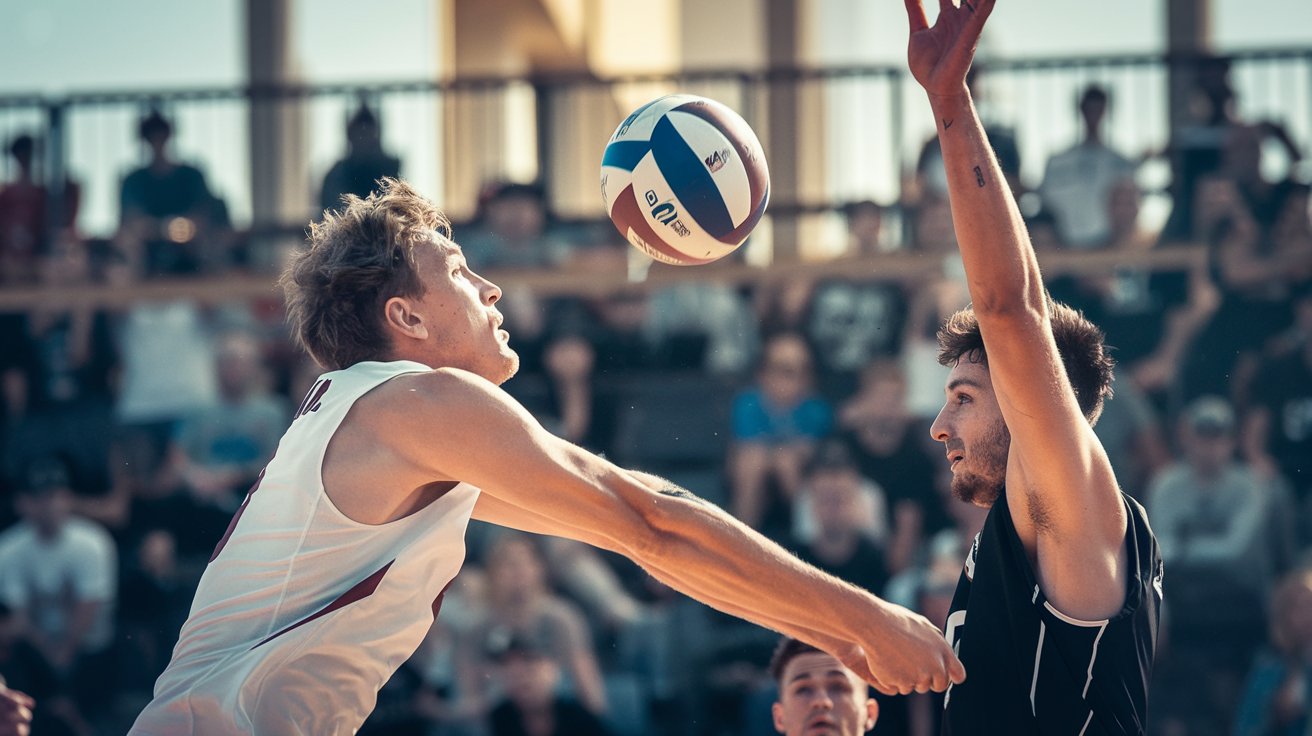
Volleyball captivates millions of players and fans worldwide with its dynamic gameplay and rich history. From its humble beginnings in a Massachusetts YMCA to becoming an Olympic sensation, volleyball fun facts reveal surprising stories about this beloved sport. Whether you’re a student researching for a project or simply curious about unique volleyball trivia, these fascinating insights will deepen your appreciation for the game’s evolution and impact across the United States and beyond.
The Fascinating History of Volleyball
William G. Morgan invented volleyball in 1895 at the International YMCA Training School in Holyoke, Massachusetts. Originally called ‘Mintonette,’ this sport was designed as an indoor winter activity that combined elements of basketball, baseball, tennis, and handball. Morgan wanted to create a less strenuous alternative to basketball for older YMCA members, making it one of the most interesting facts about volleyball that it was specifically designed for gentler exercise.
The name ‘volleyball’ emerged in 1896 when Professor Alfred Halstead observed that players were volleying the ball back and forth over the net. The first official volleyball rules were established in 1897, and the sport quickly spread across YMCA centers throughout the United States. By 1900, special volleyballs were being manufactured, and the game had evolved from its humble beginnings into a structured sport with defined regulations and equipment standards.
Early Equipment and Court Development
The original volleyball net stood 6 feet 6 inches high, which was later adjusted to the current 7 feet 11⅝ inches for men and 7 feet 4⅛ inches for women. Early players used a basketball bladder as the ball, but by 1900, the Spalding company created the first official volleyball. The court dimensions were standardized at 30 by 60 feet, divided equally by the net, creating the foundation for modern volleyball gameplay that millions enjoy today.
International Expansion and Growth
Volleyball reached international shores remarkably quickly, arriving in Canada in 1900 and spreading to Asia, Europe, and South America by 1910. The International Volleyball Federation (FIVB) was founded in 1947 with 14 founding countries, establishing global standards and competitions. This rapid international adoption makes volleyball one of the most widely played sports worldwide, with over 800 million participants across 220 countries today.
Olympic Volleyball Achievement and Records
Volleyball became an Olympic sport in 1964 at the Tokyo Games, marking a significant milestone in its global recognition. The United States has achieved remarkable success in Olympic volleyball, with both men’s and women’s teams earning multiple medals. Beach volleyball joined the Olympics in 1996 at Atlanta, creating another platform for American dominance in international competition with unique volleyball achievements that continue to inspire new generations of players.
The longest Olympic volleyball match occurred in 2004, lasting 3 hours and 26 minutes between Italy and Russia in men’s competition. American Kerri Walsh Jennings holds the record for most consecutive Olympic beach volleyball victories with 15 straight wins from 2004 to 2016. These Olympic volleyball records demonstrate the sport’s evolution into a highly competitive and strategically complex athletic endeavor that requires exceptional skill and endurance.
Understanding Volleyball Rules and Formations
Modern volleyball follows seven fundamental rules that govern gameplay, serving, and scoring. The rally point system allows teams to score on every serve, replacing the traditional side-out scoring method in 1999. Teams rotate clockwise after winning serve from opponents, ensuring all players experience different court positions. These essential volleyball rules create fair competition while maintaining the sport’s fast-paced, exciting nature that attracts players and spectators alike.
The mysterious numbers 4-2, 6-2, and 5-1 in volleyball refer to offensive formations that determine setter and hitter positions. A 4-2 formation uses two setters and four attackers, while 6-2 employs six attackers with two setters who also hit. The 5-1 formation features one setter and five attackers, commonly used in advanced competition. Understanding these volleyball formations helps players develop strategic thinking and positional awareness crucial for team success.
Scoring System Evolution
Volleyball scoring has undergone significant changes since its inception. Originally played to 15 points with side-out scoring, the system evolved to 25 points with rally point scoring in 1999. Teams must win by two points, and matches are typically best-of-five sets. The fifth set, if necessary, is played to 15 points, creating dramatic finishes that showcase the sport’s competitive intensity and strategic depth.
Player Positions and Rotations
Six players occupy specific positions on the volleyball court, rotating clockwise when their team wins the serve. The libero position, introduced in 1999, allows specialized defensive players to substitute freely for back-row players while wearing contrasting uniforms. This innovation revolutionized defensive strategies and extended rallies, making matches more exciting for spectators while requiring players to develop specialized skills for their positions.
Amazing Physical and Technical Volleyball Facts
Professional volleyball players can spike balls at speeds exceeding 80 miles per hour, making it one of the fastest ball sports in terms of attack velocity. The highest recorded vertical jump by a volleyball player reached 50 inches, demonstrating the incredible athleticism required for elite competition. Players can touch the ball a maximum of three times per side before sending it over the net, creating strategic opportunities for unique volleyball plays that require precise timing and coordination.
A regulation volleyball weighs between 9-10 ounces and measures 25.6-26.4 inches in circumference, with internal pressure of 4.26-4.61 psi. The ball travels an average of 300 feet during a single rally, and players can cover up to 2 miles during a five-set match. These technical volleyball specifications ensure consistent gameplay while demanding exceptional physical conditioning from competitive players who must maintain peak performance throughout extended matches.
Beach Volleyball vs Indoor Volleyball Differences
Beach volleyball differs significantly from indoor volleyball, featuring two players per team instead of six, and matches are played on sand courts measuring 52 by 26 feet. The outdoor environment introduces wind and sun factors that indoor players don’t experience, requiring adapted techniques and strategies. Beach volleyball uses slightly larger, softer balls with lower pressure to accommodate sand play, creating unique gameplay dynamics that distinguish it from its indoor counterpart.
Tournament beach volleyball follows a best-of-three sets format, with the first two sets played to 21 points and the third set to 15 points. Players must win by two points in all sets, and teams switch sides every seven points in sets one and two, every five points in set three. These beach volleyball rules create faster-paced matches while accounting for environmental factors like wind direction and sun position that significantly impact gameplay strategies.
Sand Court Specifications and Challenges
Beach volleyball sand must be at least 15 inches deep and composed of fine, clean particles free from rocks and shells. The sand temperature can reach 120°F during summer tournaments, creating additional physical challenges for players. Wind speeds of 15+ mph significantly affect ball trajectory, requiring players to develop specialized beach volleyball skills including adjusted serving techniques, modified attacks, and enhanced communication to overcome environmental obstacles.
Professional Beach Volleyball Circuit
The Association of Volleyball Professionals (AVP) operates the premier beach volleyball tour in the United States, featuring events across California, Florida, and other coastal states. Prize money for major tournaments can exceed $300,000, with top players earning substantial incomes through sponsorships and tournament winnings. The sport’s popularity has grown exponentially since joining the Olympics, creating professional opportunities for hundreds of American athletes.
Volleyball Popularity and Participation Statistics
Over 26 million Americans play volleyball regularly, making it one of the most popular recreational sports in the United States. High school volleyball participation has increased by 15% since 2010, with over 450,000 students competing annually. College volleyball programs continue expanding, with NCAA Division I featuring 334 women’s programs and 23 men’s programs as of 2024, reflecting the sport’s growing emphasis on youth volleyball development across educational institutions.
Professional volleyball leagues in the United States include Athletes Unlimited and the Premier Volleyball League, providing career opportunities for elite players. The USA Volleyball membership exceeds 400,000 registered participants, supporting grassroots development through youth programs, coaching education, and facility development. These statistics demonstrate volleyball’s significant impact on American sports culture and its continued growth potential in recreational and competitive settings.
Surprising Volleyball World Records and Achievements
The longest volleyball marathon lasted 85 hours and 5 minutes, set by 12 players in The Netherlands in 2011, showcasing incredible endurance and dedication. The highest altitude volleyball game occurred at 19,347 feet on Mount Everest base camp, proving the sport’s adaptability to extreme conditions. The largest volleyball tournament featured 2,635 teams competing simultaneously in Thailand, demonstrating volleyball’s global appeal and organizational capabilities that create extraordinary volleyball achievements worldwide.
Brazilian player Gilberto ‘Giba’ Godoy Filho holds records for most World Championship victories with three titles, while American Misty May-Treanor achieved 112 consecutive beach volleyball tournament victories. The fastest volleyball serve recorded reached 82.8 mph by Bulgarian player Matey Kaziyski, illustrating the sport’s evolution toward greater power and athleticism. These incredible volleyball records inspire players while showcasing human potential and the sport’s capacity for producing memorable competitive moments.
Cultural Impact and Fun Volleyball Trivia
Volleyball appears in numerous movies and TV shows, including ‘Top Gun’ and ‘Side Out,’ contributing to American pop culture and inspiring recreational participation. The sport generates over $5 billion annually in economic impact through equipment sales, facility rentals, tournaments, and travel. Social media volleyball content receives millions of views, with trick shots and highlight reels going viral regularly, demonstrating the sport’s entertainment value and cultural significance in modern America.
Many celebrities including Gabrielle Reece, Kerri Walsh Jennings, and April Ross have become household names through volleyball success, inspiring youth participation and media coverage. The sport’s inclusivity appeals to diverse demographics, with adaptive volleyball programs serving disabled athletes and recreational leagues accommodating all skill levels. These fun volleyball facts about culture illustrate how the sport transcends competition to become a social phenomenon that brings communities together through shared athletic experiences.
Related video about fun facts about volleyball
This video complements the article information with a practical visual demonstration.
What you should know
What are the most unique volleyball fun facts?
Volleyball was originally called ‘Mintonette’ when invented in 1895, and the first balls were actually basketball bladders. Professional players can spike balls at over 80 mph, and the sport became Olympic in 1964. The longest volleyball marathon lasted 85 hours, and over 26 million Americans play volleyball regularly, making these some of the most fascinating volleyball trivia facts.
What do the numbers 4-2, 6-2, and 5-1 mean in volleyball?
These numbers represent volleyball offensive formations. 4-2 uses four attackers and two setters, 6-2 employs six attackers with two setters who also attack, and 5-1 features five attackers with one dedicated setter. The 5-1 formation is most common in advanced play because it provides consistent setting while maximizing attacking options throughout rotations.
What are the 7 essential rules of volleyball?
The seven fundamental volleyball rules include: teams rotate clockwise when winning serve, maximum three touches per side, rally point scoring to 25 points (win by 2), no catching or carrying the ball, players cannot touch the net during play, serves must clear the net and land in bounds, and substitutions must follow specific rotation patterns. These rules ensure fair competition and maintain game flow.
How does beach volleyball differ from indoor volleyball?
Beach volleyball features two players per team versus six indoors, uses softer balls with lower pressure, and is played on sand courts measuring 52×26 feet. Matches are best-of-three sets (21-21-15 points) compared to best-of-five sets (25 points) indoors. Environmental factors like wind and sun significantly impact beach play, requiring specialized techniques and strategies.
What are some interesting volleyball history facts for students?
William Morgan invented volleyball in 1895 at a Massachusetts YMCA as a gentler alternative to basketball. The sport spread internationally within 15 years and became Olympic in 1964. The name changed from ‘Mintonette’ to ‘volleyball’ in 1896, and the first official rules were established in 1897. Today, over 800 million people play volleyball worldwide across 220 countries.
What makes volleyball unique compared to other sports?
Volleyball is unique because teams cannot catch or hold the ball, must work together for all attacks with maximum three touches, and players rotate positions throughout the game. It’s one of few sports where players cannot cross into opponent territory, the ball never stops moving during rallies, and specialized positions like libero allow unlimited substitutions for enhanced defensive play.
| Volleyball Aspect | Key Details | Impact |
|---|---|---|
| Historical Origin | Invented 1895 in Massachusetts YMCA | Created accessible indoor winter sport |
| Olympic Status | Indoor (1964) and Beach (1996) Olympics | Global recognition and elite competition |
| US Participation | 26+ million Americans play regularly | Major recreational and competitive sport |
| Technical Skills | Spikes reach 80+ mph speeds | Demonstrates exceptional athleticism |
| Cultural Influence | $5 billion annual economic impact | Significant sports industry contribution |