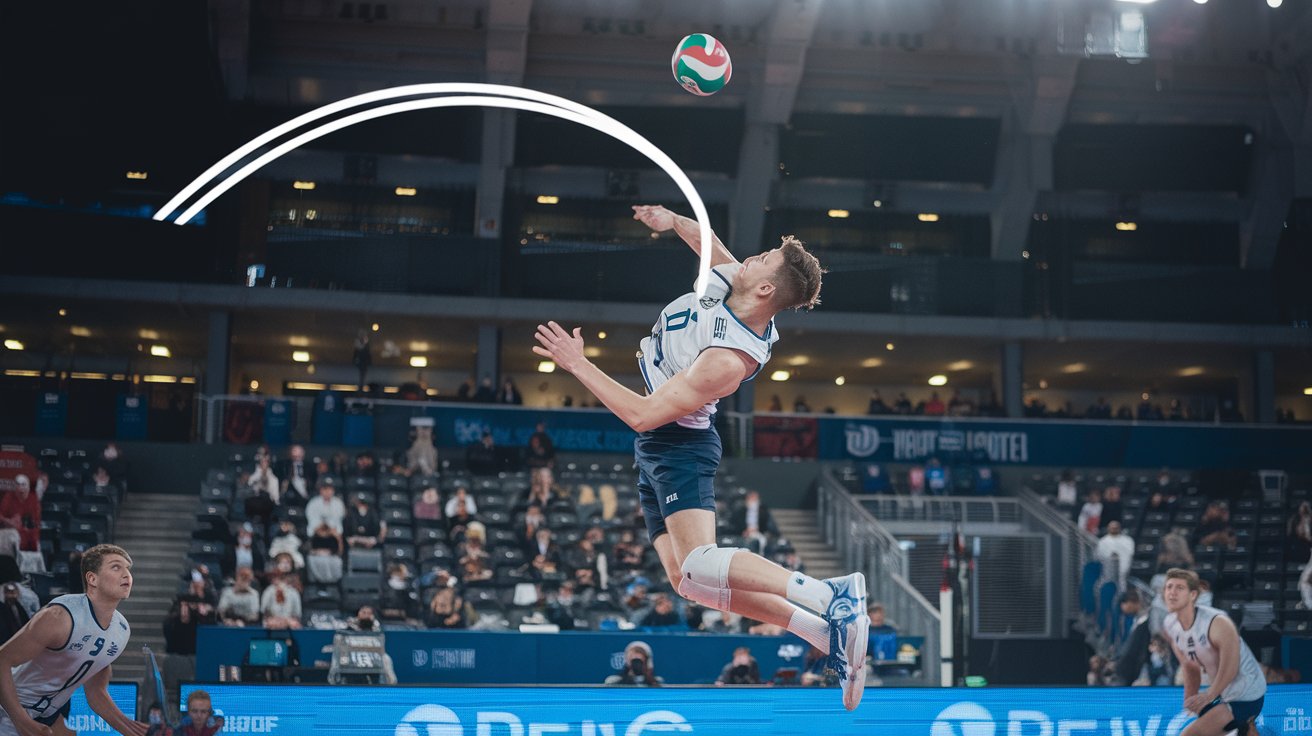
A kill in volleyball is an attack hit that immediately results in a point for your team, typically by the ball hitting the opponent’s court untouched or being undefendable. Understanding volleyball kills is essential for players, coaches, and fans to appreciate the game’s most exciting offensive plays and scoring opportunities.
Understanding the Volleyball Kill: Definition and Basics
A volleyball kill occurs when an offensive player successfully attacks the ball in a way that directly results in a point. The kill is recorded when the ball hits the opponent’s court floor, bounces off an opponent and goes out of bounds, or when the opposing team cannot make a legal return. According to USA Volleyball statistics from 2024, kills account for approximately 65% of all points scored in competitive volleyball matches.
The kill in volleyball rules specify that the attack must be legal and result in an immediate point. Unlike other volleyball statistics, a kill represents the final successful action in an offensive sequence. The attacking player must hit the ball with proper technique while avoiding violations such as net contact, centerline violations, or attacking from an illegal position.
Official Rules for Recording a Kill
The rule for a kill in volleyball is straightforward: the attack must directly end the rally in your team’s favor. USA Volleyball’s 2024 guidelines state that kills are recorded when the ball contacts the opponent’s playing surface, when an opponent’s legal contact sends the ball out of bounds, or when the attack cannot be returned legally. Statistical tracking shows that kills are the most objective volleyball statistic, as they represent definitive point-scoring actions.
Kill vs Attack vs Spike: Key Differences
Is a kill the same as a spike? No, these terms represent different concepts in volleyball. A spike refers to the technique of forcefully hitting the ball downward, while a kill is the statistical result when any attack scores a point. Every kill can involve a spike, but not every spike results in a kill. An attack in volleyball is any offensive contact intended to send the ball to the opponent’s side, regardless of the outcome.
Types of Volleyball Kills and Execution Methods
Volleyball kills come in various forms, each requiring different techniques and timing. The most common types include cross-court kills, line shots, tips, and roll shots. Different forms of kill in volleyball allow players to adapt to defensive positioning and maximize scoring opportunities. Professional players in the 2024 season average 3.2 kills per set, with outside hitters typically leading in kill totals.
Power kills involve forceful downward attacks that overwhelm the defense, while placement kills rely on strategic shot selection to find open court areas. What does kill it mean in volleyball often refers to executing a dominant attack that demoralizes the opposition and energizes your team. Tool kills occur when attackers intentionally hit the opponent’s block to deflect the ball out of bounds.
Power Attacks and Hard-Driven Kills
Power attacks generate the highest velocity kills in volleyball, with elite players achieving ball speeds exceeding 70 mph in 2024 competitions. These hard-driven kills require exceptional upper body strength, proper approach mechanics, and precise timing. The key to successful power kills lies in maximizing contact height and generating maximum arm swing velocity while maintaining control and accuracy.
Strategic Placement and Off-Speed Kills
Placement kills demonstrate volleyball intelligence and court awareness. Off-speed attacks including tips, roll shots, and strategic placement can be equally effective as power attacks. Smart attackers vary their kill techniques based on defensive alignment, achieving success rates of 45-55% when mixing power and placement effectively according to 2024 volleyball analytics.
Who Can Get Kills in Volleyball: Positions and Opportunities
While any player can potentially record a kill, certain positions naturally accumulate more killing opportunities. Kill leaders by position consistently show outside hitters, middle blockers, and opposite hitters as the primary kill producers. USA Volleyball data from 2024 indicates that outside hitters average 40% of team kills, middle blockers contribute 25%, and opposite hitters account for 20% of total team kills.
Back-row players can also achieve kills through legal attacks from behind the 10-foot line. Who can get a kill in volleyball depends on court position, rotation, and tactical situations. Liberos cannot attack the ball above net height, but other back-row players frequently contribute kills through strategic back-row attacks and emergency plays.
Front-Row Attack Specialists
Front-row attackers have the greatest kill potential due to their positioning advantages. Outside hitters typically lead teams in total kills, averaging 12-15 kills per match in competitive play. Middle blockers excel in quick attacks and slide kills, while opposite hitters provide powerful cross-court options. The 2024 season shows increasing versatility among front-row players in kill production.
Back-Row Attack Contributions
Back-row attacks add unpredictability to offensive systems and can generate effective kills. Back-row attackers must contact the ball from behind the 10-foot line but can achieve powerful kills with proper technique. Modern volleyball emphasizes back-row attack development, with teams averaging 3-4 back-row kills per set in 2024 competitive matches.
The Kill Chain: How Volleyball Kills Develop
Successful kills result from coordinated team efforts involving multiple touches and tactical execution. The kill chain typically begins with serve receive or dig, progresses through setting, and culminates in the attack. Each component must function properly for kill opportunities to emerge. Statistical analysis from 2024 shows that teams with superior passing average 2.8 more kills per set than teams with poor passing statistics.
The relationship between kills and digs in volleyball creates the foundation for successful offensive systems. Quality digs provide better setting opportunities, which translate to higher kill percentages. Teams that excel in defensive digs create more transition attack opportunities, often resulting in easier kills against disorganized defenses.
Understanding Volleyball Kill Statistics
Kill statistics provide crucial insights into player and team performance effectiveness. Understanding kill statistics helps coaches evaluate offensive productivity and make strategic adjustments. The primary kill-related statistics include total kills, kills per set, kill percentage, and kill efficiency. Advanced analytics in 2024 also track kill velocity, placement accuracy, and situational kill success rates.
Professional volleyball teams analyze kill patterns to optimize offensive strategies and player utilization. Kill percentage differs from hitting percentage, as it measures successful attacks versus total attack attempts, while hitting percentage factors in errors and blocks. Modern volleyball statistics show that teams with kill percentages above 45% win approximately 75% of their matches.
Kills Per Set Analysis
Kills per set serves as a fundamental measure of offensive production and player effectiveness. Elite outside hitters average 4-6 kills per set, while middle blockers typically achieve 2-3 kills per set in competitive play. Team kill totals generally range from 35-45 kills per match in evenly contested games, with higher totals indicating superior offensive systems or extended match duration.
Kill Percentage vs Hitting Percentage
Kill percentage not the same as hitting percentage represents an important distinction in volleyball statistics. Kill percentage measures kills divided by total attacks, while hitting percentage subtracts errors and includes blocked attacks in the calculation. A player might achieve a 55% kill percentage but only a 35% hitting percentage due to errors and blocked attempts. Understanding both statistics provides comprehensive offensive evaluation.
Executing the Perfect Volleyball Kill: Technique Guide
Mastering kill execution requires proper approach, timing, and contact technique. How to execute a perfect volleyball kill involves seven critical elements: approach angle, footwork timing, jump mechanics, arm swing technique, ball contact point, wrist snap, and follow-through. Elite players spend countless hours perfecting these fundamentals to achieve consistent kill production.
The approach sequence begins 10-12 feet from the net with a controlled four-step or three-step approach. Pro tips to power your volleyball kill emphasize maintaining consistent timing, achieving maximum vertical jump, and contacting the ball at the highest possible point. Successful attackers develop muscle memory through repetitive practice and gradually increase attack velocity as technique improves.
Related video about what is a kill in volleyball
This video complements the article information with a practical visual demonstration.
What you should know
What is the rule for a kill in volleyball?
A kill is recorded when an attack directly results in a point for your team. The ball must either hit the opponent’s court, bounce off an opponent and go out of bounds, or be undefendable. The attack must be legal without violations like net contact or illegal positioning.
What are kills and digs in volleyball?
Kills are successful attack hits that immediately score points, while digs are defensive saves of attacked balls. Kills represent offensive success, and digs represent defensive success. Both statistics are crucial for team performance, with good digs often leading to kill opportunities.
Is a kill the same as a spike?
No, a kill and spike are different concepts. A spike refers to the hitting technique of forcefully attacking the ball downward, while a kill is the statistical result when any attack scores a point. Every kill might involve a spike, but not every spike results in a kill.
What does ‘kill it’ mean in volleyball?
Kill it typically means to execute a dominant, powerful attack that overwhelms the defense and scores a definitive point. The phrase encourages players to attack aggressively and finish the rally decisively, often referring to putting maximum power and precision into the attack.
Is an ace a kill in volleyball?
No, an ace is not a kill. An ace is a serve that directly results in a point without the receiving team making a legal return. Kills specifically refer to attack hits, while aces refer to serves. Both are point-scoring actions but involve different skills and techniques.
Who can get kills in volleyball?
Any player can potentially get a kill, but front-row players (outside hitters, middle blockers, opposite hitters) have the most opportunities. Back-row players can also get kills through legal attacks from behind the 10-foot line. Liberos cannot attack above net height but other positions can contribute kills.
| Kill Aspect | Key Details | Strategic Value |
|---|---|---|
| Definition | Attack hit that directly scores a point | Primary offensive scoring method |
| Success Rate | Elite players achieve 45-55% kill percentage | Measures offensive efficiency |
| Position Leaders | Outside hitters average 40% of team kills | Guides player specialization |
| Match Impact | Teams with 45%+ kill rate win 75% of matches | Direct correlation to victory |