
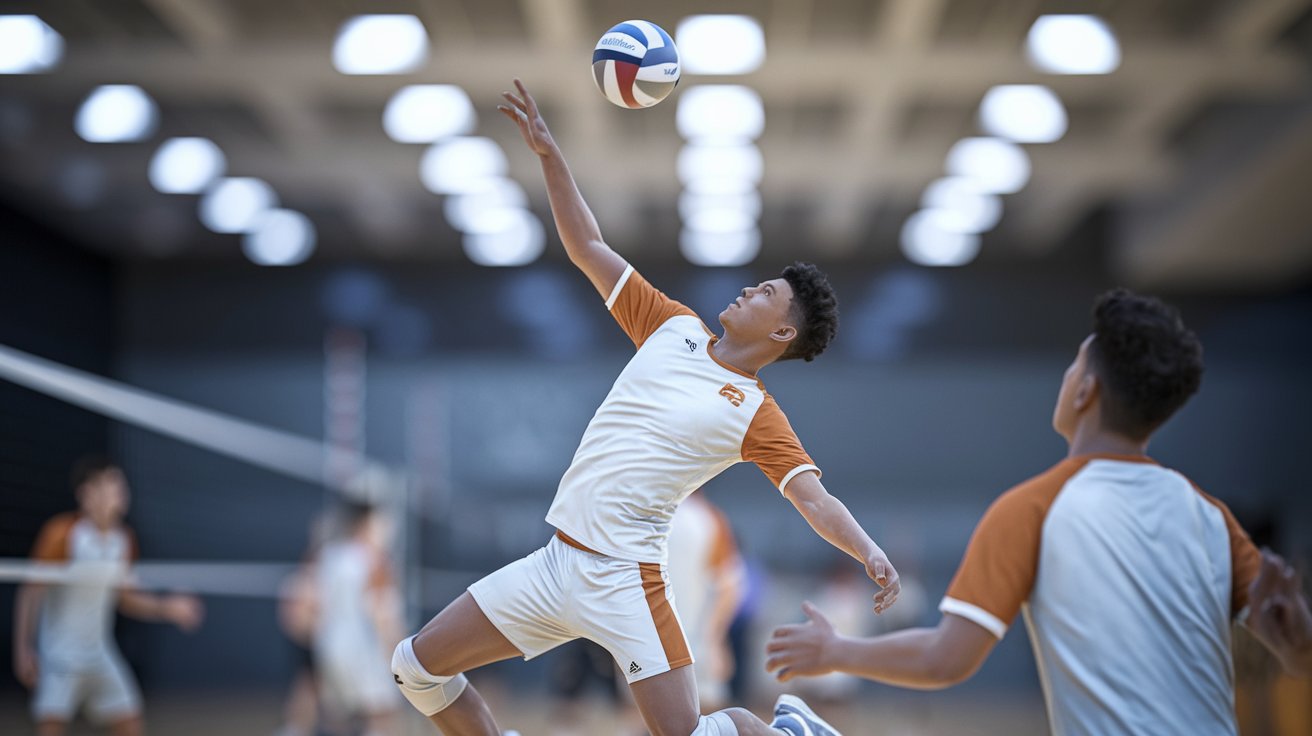
Learning how to serve a volleyball is the first essential skill every player must master to excel on the court. Whether you’re a beginner stepping onto the court for the first time or looking to refine your technique, proper serving form is crucial for consistent performance. This comprehensive guide covers everything from basic underhand serves to advanced overhand techniques, helping you develop the confidence and skill needed to dominate your volleyball games in 2025.
Understanding Volleyball Serving Fundamentals
The volleyball serve is the only skill in volleyball where you have complete control over the ball’s trajectory and placement. Unlike other sports where serves are optional, volleyball requires every point to begin with a serve, making it one of the most critical skills to master. In high school and collegiate volleyball across the United States, serving accounts for approximately 15-20% of all points scored directly, according to 2024 NCAA volleyball statistics.
Mastering proper serving form involves understanding the biomechanics of body positioning, ball contact, and follow-through. The serve must clear the net (which stands 7 feet 11⅝ inches high for women and 8 feet for men) and land within the opposing court’s boundaries. Modern volleyball emphasizes aggressive serving as a weapon, not just a way to put the ball in play, making technical proficiency essential for competitive success.
How to Serve in Volleyball Underhand
The underhand serve is considered the easiest form of serve in volleyball and serves as the foundation for all serving techniques. This serving method is particularly popular among beginners and younger players because it requires less coordination and strength than overhand serves. Youth volleyball programs across the United States typically start with underhand serving before progressing to more advanced techniques.
To execute an underhand serve, position your feet shoulder-width apart with your non-dominant foot slightly forward. Hold the ball in your non-hitting hand at waist level, keeping your hitting arm straight and pendulum-like. The contact point should be made with a flat, firm surface of your hand or fist, striking the ball in an upward trajectory to clear the net while maintaining control over placement.
Step-by-Step Underhand Serve Technique
Begin your underhand serve by standing behind the service line with your body facing the net. Hold the ball in your non-dominant hand extended in front of your body at approximately waist height. Your serving arm should be straight and relaxed, ready to swing in a pendulum motion. Keep your eyes focused on the ball throughout the entire serving motion to ensure consistent contact.
Common Underhand Serving Mistakes
The most frequent error beginners make with underhand serving is dropping the ball too early or tossing it instead of holding it steady. Another common mistake involves bending the serving arm at the elbow, which reduces power and accuracy. Additionally, many players fail to follow through properly, stopping their arm swing immediately after contact rather than continuing the motion toward their target area on the court.
Mastering the Overhand Serve
The overhand serve is the most versatile and powerful serving technique in modern volleyball, utilized by players at all competitive levels from high school through professional leagues. This serving method allows for greater ball speed, spin variation, and precise placement compared to underhand techniques. According to USA Volleyball coaching statistics from 2024, over 85% of serves at the varsity high school level and above are overhand serves.
Learning how to overhand serve in volleyball requires developing proper toss consistency, timing, and arm swing mechanics. The overhand serve involves a throwing motion similar to a tennis serve or baseball throw, making it more complex but significantly more effective as an offensive weapon. Players who master this technique can develop multiple serve variations to keep opponents guessing.
Proper Foot Positioning for Overhand Serves
Correct foot positioning forms the foundation of an effective overhand serve. Stand with your feet shoulder-width apart, with your non-dominant foot positioned slightly forward in a comfortable athletic stance. Your weight should be evenly distributed between both feet initially, then shift to your back foot during the toss phase. This positioning provides stability while allowing for proper weight transfer during the serving motion.
Ball Toss Technique and Timing
The ball toss is arguably the most critical component of overhand serving success. Hold the ball in your non-dominant hand with your fingertips, not your palm, to maintain better control. Toss the ball approximately 2-3 feet above your head and slightly in front of your hitting shoulder. The toss should be consistent in height and placement, as any variation will significantly impact your serve’s accuracy and power.
Types of Overhand Serves
Modern volleyball features several distinct types of serve variations that advanced players use to challenge opponents and create scoring opportunities. Each serve type has specific applications and requires different techniques to execute effectively. Understanding these variations allows players to adapt their serving strategy based on game situations, opponent weaknesses, and personal strengths.
The five main types of serves in competitive volleyball include the float serve, topspin serve, jump serve, hybrid serves, and specialty serves like the sky ball serve. Each technique produces different ball flight patterns, speeds, and challenges for receiving teams. Players typically specialize in 2-3 serve types to maintain consistency while providing tactical variety.
Float Serve Fundamentals
The float serve is characterized by its unpredictable flight pattern caused by minimal or no ball rotation. This serve creates erratic movement through the air, making it extremely difficult for opponents to pass accurately. Contact the ball with a firm, flat hand surface while minimizing follow-through to reduce spin. The float serve is considered one of the most effective serves at all competitive levels due to its deceptive movement.
Topspin Serve Technique
The topspin serve utilizes forward rotation to create a sharp downward trajectory after crossing the net. This serve type requires a more aggressive arm swing with a snapping wrist action at contact. The topspin causes the ball to drop quickly after clearing the net, often resulting in serves that land deep in the court with significant pace. This technique is particularly effective against teams with poor back-row defense.
Advanced Serving Techniques for Competitive Play
Competitive volleyball players must develop advanced serving skills to succeed at higher levels of play. Jump serving has become increasingly popular in NCAA Division I volleyball, with approximately 40% of serves at this level being jump serves according to 2024 statistics. This technique combines the power of an attack with serving precision, creating one of the most challenging serves for opponents to handle.
Learning how to serve a volleyball like a pro involves developing consistency, power, and strategic placement. Professional and collegiate players spend significant practice time perfecting their serves, often practicing 100-200 serves daily during the season. The ability to serve aggressively while maintaining accuracy separates elite players from recreational competitors.
Serving Strategies and Court Placement
Strategic serving placement can be as important as serve speed and technique in creating scoring opportunities. Effective servers study opponent passing patterns and target specific zones or players to disrupt offensive systems. Common target areas include the deep corners, short zones just over the net, and seams between passers where responsibility might be unclear.
Understanding how to serve a volleyball in high school competition requires balancing aggression with consistency. High school players should focus on serving tough enough to challenge opponents while maintaining a service error rate below 15%. This balance ensures that serving becomes a weapon rather than a liability during critical match moments.
Common Serving Errors and Corrections
The three most common mistakes players make with serving include inconsistent ball toss, poor contact point timing, and inadequate follow-through. Toss inconsistency leads to erratic serves and increased error rates, while mistimed contact results in serves that either go into the net or sail long. Poor follow-through reduces power and accuracy while increasing the likelihood of serving errors.
Correcting these fundamental errors requires focused practice and often professional coaching guidance. Players should practice their toss separately from the full serving motion, ensuring they can consistently place the ball in the same location. Video analysis has become increasingly common in volleyball training, allowing players to identify and correct technical flaws in their serving form.
Hand Position and Contact Point
Proper hand positioning during ball contact is crucial for serving effectiveness and injury prevention. Your hitting hand should be firm with fingers spread wide to create a large contact surface. Contact the ball with the heel of your palm and lower fingers, avoiding contact with fingertips which can cause injury and reduce power. The contact point should be at the highest comfortable reach of your arm swing.
Arm Swing Mechanics and Follow-Through
The arm swing should follow a high-to-low pattern similar to throwing a ball overhand. Begin with your elbow high and hand behind your head, then accelerate through the contact point with a full follow-through toward your target. Your arm should finish across your body naturally, with your hitting hand ending near your opposite hip. This complete motion ensures maximum power transfer and reduces strain on your shoulder joint.
Practice Drills and Training Methods
Developing consistent serving skills requires structured practice and progressive difficulty increases. Beginning players should start with wall serves, standing 10-15 feet from a wall and practicing toss consistency and contact technique. As skills improve, players can progress to serving over a net at reduced distances before attempting full-court serves. Target practice using cones or specific court zones helps develop placement accuracy.
Advanced players benefit from pressure serving drills that simulate game situations. These include serving after physical fatigue, serving under time pressure, and serving to specific targets while maintaining consistency. Many successful programs implement daily serving requirements, such as making 8 out of 10 serves to specific zones before ending practice sessions.
Related video about how to serve a volleyball
This video complements the article information with a practical visual demonstration.
Essential Q&A about how to serve a volleyball
How to serve a volleyball step by step?
Start by positioning your feet shoulder-width apart behind the service line. For overhand serves, toss the ball 2-3 feet above your head with your non-dominant hand. Keep your eyes on the ball, swing your hitting arm in a throwing motion, and contact the ball at the highest point of your reach. Follow through toward your target area and maintain balance throughout the motion.
What is the easiest form of serve in volleyball?
The underhand serve is the easiest form of volleyball serve, making it perfect for beginners. This technique requires less coordination and strength compared to overhand serves. Players hold the ball steady in their non-hitting hand and use a pendulum arm swing to contact the ball, making it more forgiving and consistent for new players.
What are the three common mistakes people make with the overhand serve?
The three most common overhand serving mistakes are inconsistent ball toss placement, poor timing at the contact point, and inadequate follow-through. An inconsistent toss leads to erratic serves, mistimed contact causes net errors or long serves, and poor follow-through reduces power and accuracy while increasing injury risk.
How to hold your hand when serving a volleyball?
Hold your hitting hand firm with fingers spread wide to create maximum contact surface. Contact the ball with the heel of your palm and lower fingers, avoiding fingertip contact which can cause injury. Keep your wrist stable and hand flat at contact, then follow through with a natural snapping motion toward your target.
How many types of serves are there in volleyball?
There are five main types of volleyball serves: underhand serve, float serve, topspin serve, jump serve, and specialty serves like the sky ball serve. Each serve type produces different ball flight patterns and challenges for opponents. Most competitive players master 2-3 serve types to provide tactical variety while maintaining consistency.
What is the most effective volleyball serve for beginners?
The float serve is the most effective serve for intermediate beginners who have mastered basic overhand technique. This serve creates unpredictable ball movement with minimal spin, making it difficult for opponents to pass accurately. It requires less power than topspin serves while being more challenging than basic overhand serves, making it ideal for developing players.
| Serve Type | Skill Level Required | Key Benefits |
|---|---|---|
| Underhand Serve | Beginner | Easy to learn, high consistency, builds confidence |
| Float Serve | Intermediate | Unpredictable movement, effective at all levels |
| Topspin Serve | Advanced | High power, sharp ball drop, aggressive weapon |
| Jump Serve | Expert | Maximum power, intimidation factor, ace potential |