
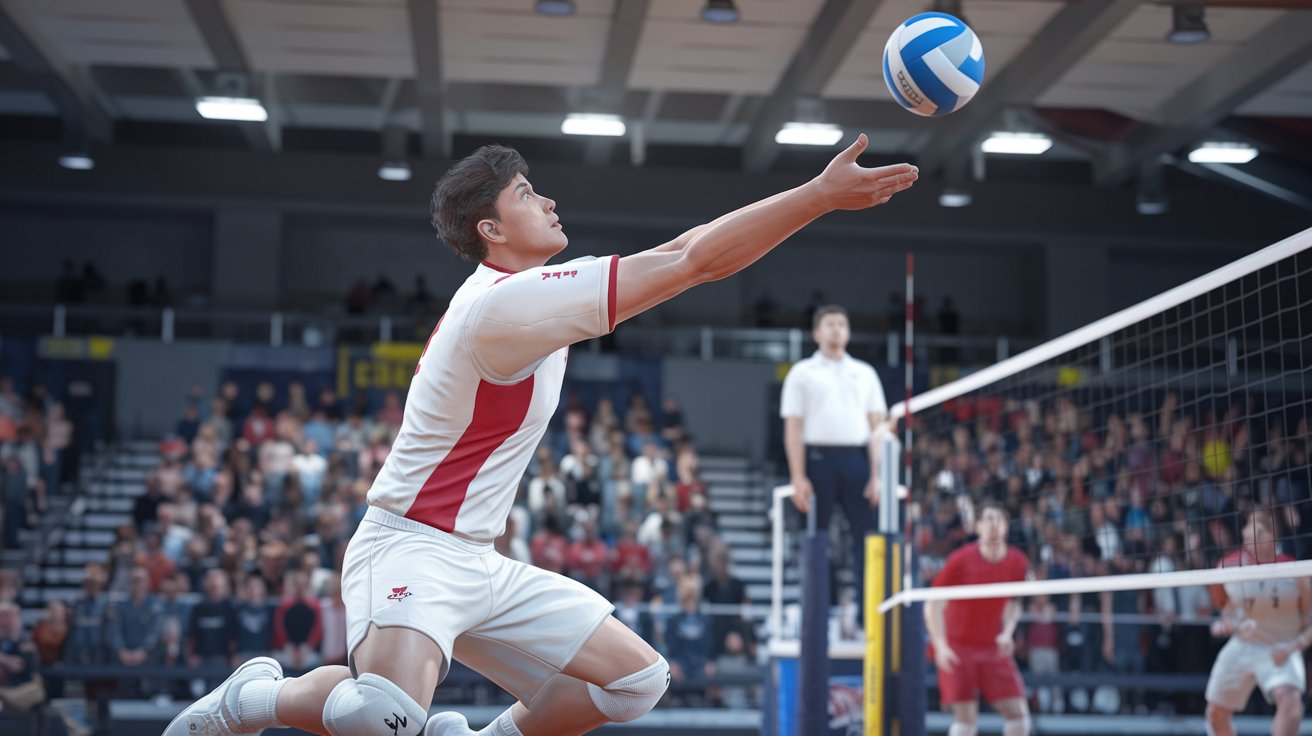
Learning how to play volleyball opens the door to one of America’s most popular sports, with over 26 million participants nationwide. This comprehensive guide covers everything from basic volleyball rules to advanced techniques, helping beginners master the fundamentals and develop essential skills for recreational or competitive play.
Basic Volleyball Rules Every Beginner Must Know
Understanding the 5 basic rules of volleyball forms the foundation of successful gameplay. The court measures 60 feet by 30 feet with a net height of 7 feet 11⅝ inches for men and 7 feet 4⅛ inches for women. Each team has six players on the court, and matches are played in a best-of-five sets format, with each set played to 25 points using rally scoring.
The most fundamental rule involves the three-hit limit per side before sending the ball over the net. Players cannot catch, hold, or carry the ball, and the same player cannot hit the ball twice consecutively except during blocking. Volleyball positions rotate clockwise after winning the serve, ensuring all players experience different roles throughout the match.
Scoring System and Set Structure
Modern volleyball uses rally scoring, meaning a point is awarded on every serve regardless of which team served. Sets are played to 25 points with a two-point margin required to win. The fifth set, if needed, is played to 15 points. This volleyball rules change has made matches more predictable in duration and increased spectator engagement across American leagues.
Court Boundaries and Net Violations
Players must understand court boundaries to avoid costly errors. The ball is considered in play if any part touches the boundary line. Basic volleyball violations include net touches, crossing under the net into opponent territory, and attacking serves while standing in front of the 10-foot attack line. These fundamental rules ensure fair play and maintain game flow.
Essential Volleyball Positions and Player Roles
The 7 positions in volleyball include setter, outside hitter, middle blocker, opposite hitter, libero, and two defensive specialists. Each position requires specific skills and responsibilities that contribute to team success. The setter acts as the quarterback, distributing balls to attackers, while the libero specializes in defensive play and cannot attack above net height.
Front row players (positions 2, 3, and 4) can attack and block at the net, while back row players (positions 1, 5, and 6) focus on defense and can only attack from behind the 10-foot line. Understanding these volleyball positions helps beginners appreciate team dynamics and develop position-specific skills essential for competitive play.
Setter Position and Responsibilities
The setter orchestrates offensive plays by delivering accurate sets to hitters. This position requires excellent hand position technique, court awareness, and decision-making skills. Setters typically handle the second contact and must master both front and back setting techniques to create scoring opportunities for their teammates.
Libero Role and Defensive Specialization
The libero wears a contrasting jersey and specializes in defensive play, serving reception, and digging attacks. This player cannot serve, attack, or set above net height but can substitute freely without counting against team substitutions. The libero position has revolutionized volleyball strategy by allowing teams to keep their best defensive player on the court consistently.
Step-by-Step Volleyball Skills Development
Learning how to play volleyball step by step begins with mastering fundamental skills: serving, passing, setting, attacking, and blocking. Each skill builds upon previous techniques, creating a progression that leads to complete player development. Beginners should focus on proper form before increasing power or speed, as muscle memory developed early determines long-term success.
The 5 basic steps in volleyball skill development include body positioning, contact point timing, follow-through technique, footwork coordination, and consistent practice repetition. Professional coaches recommend dedicating specific practice time to each fundamental skill before combining them in game situations.
Mastering Volleyball Serving Techniques
Learning how to play volleyball serve effectively gives teams immediate scoring opportunities and defensive advantages. The underhand serve provides consistency for beginners, while the overhand serve offers more power and precision. Advanced players develop float serves, jump serves, and tactical serving strategies to pressure opposing receivers and create favorable rally conditions.
Proper serving technique starts with consistent ball toss placement, balanced body positioning, and smooth contact motion. Volleyball serving practice should emphasize accuracy over power initially, with beginners aiming for specific court zones before developing advanced serving variations used in competitive play.
Underhand Serve Fundamentals
The underhand serve provides reliability for volleyball beginners learning basic technique. Players position the non-hitting hand to hold the ball steady while the hitting hand swings in a pendulum motion. This serve type offers excellent control and consistency, making it ideal for recreational play and youth development programs.
Overhand Serve Progression
Overhand serving requires coordinated ball toss, body rotation, and arm swing timing. Players should practice the motion without a ball first, focusing on consistent toss height and contact point. The volleyball serve becomes more effective as players develop timing, accuracy, and eventually power through proper technique refinement.
Hand Positioning and Ball Control Techniques
Proper volleyball hand position varies depending on the skill being performed. For passing, hands form a platform with thumbs parallel and wrists firm. Setting requires fingertip control with hands shaped like holding a large ball above the forehead. Attacking demands an open hand contact with fingers spread for maximum ball control and power transfer.
Ball control fundamentals include proper contact points, consistent hand shapes, and appropriate force application. How to play volleyball successfully depends on developing muscle memory for these hand positions through repetitive practice and gradual skill progression from basic to advanced techniques.
Playing Volleyball at Home and Practice Options
Learning how to play volleyball at home provides valuable practice opportunities between organized training sessions. Wall passing drills, setting practice against ceilings, and serving into target areas help develop fundamental skills. Backyard setups with adjustable nets allow families to practice together while maintaining social distancing requirements popular since 2024.
Home practice should focus on individual skill development rather than full game simulation. Volleyball practice equipment like resistance bands, reaction balls, and portable nets enable skill development in limited spaces. Many professional players credit home practice routines for accelerating their skill development during formative years.
Indoor Practice Drills
Indoor volleyball training focuses on individual skills that don’t require large spaces. Wall passing drills improve ball control, while ceiling sets develop hand-eye coordination. Players can practice serving motion without balls to perfect technique and timing before moving to outdoor or gym settings.
Backyard Training Setup
Outdoor practice spaces should accommodate serving, passing, and basic attacking motions. Portable nets, boundary markers, and target zones create structured volleyball practice environments. Weather considerations in different US regions affect year-round outdoor training availability, making indoor alternatives essential for consistent skill development.
Advanced Strategies and Game Tactics
Advanced volleyball strategy involves understanding offensive systems, defensive formations, and transition plays. Teams commonly use 6-2, 5-1, or 4-2 offensive systems based on player strengths and competitive levels. Defensive strategies include rotational coverage, specialized blocking schemes, and back row attack patterns that maximize team effectiveness.
Tactical awareness develops through game experience and strategic education. Players must understand when to use different techniques, how to read opponent tendencies, and ways to exploit defensive weaknesses. Competitive volleyball requires mental preparation, strategic thinking, and adaptability throughout matches.
Common Beginner Mistakes and How to Avoid Them
New players often struggle with consistent ball contact, proper footwork timing, and court positioning awareness. The most common volleyball mistakes include reaching for balls instead of moving feet, inconsistent serving technique, and poor communication with teammates. Addressing these issues early prevents development of bad habits that become difficult to correct later.
Systematic skill development and proper coaching guidance help volleyball beginners avoid frustration while building confidence. Regular feedback, video analysis, and structured practice plans accelerate learning while ensuring proper technique development from the beginning stages of play.
Related video about how to play volleyball
This video complements the article information with a practical visual demonstration.
Questions & Answers
What are the 5 basic rules of volleyball?
The five basic volleyball rules include: 1) Each team has six players on court, 2) Teams can hit the ball maximum three times per side, 3) Players rotate positions clockwise after winning serve, 4) Sets are played to 25 points with two-point margin, and 5) No player can hit the ball twice consecutively except during blocking situations.
How do you play volleyball step by step?
To play volleyball step by step: 1) Learn basic positions and court layout, 2) Master fundamental skills (serving, passing, setting), 3) Practice individual techniques repeatedly, 4) Understand rotation and scoring rules, 5) Develop teamwork and communication skills, 6) Apply skills in game situations with increasing complexity and competitive intensity.
What are the 7 positions in volleyball?
The seven volleyball positions are: setter (orchestrates offense), outside hitter (primary attacker), middle blocker (blocks and quick attacks), opposite hitter (right-side attacker), libero (defensive specialist), and two additional defensive specialists or utility players who rotate through back row positions during competitive play.
What are the 5 basic steps in volleyball skill development?
The five basic steps in volleyball skill development include: 1) Proper body positioning and stance, 2) Correct timing for ball contact, 3) Follow-through technique completion, 4) Coordinated footwork patterns, and 5) Consistent practice repetition with gradual complexity increases. Mastering each step ensures solid fundamental development for long-term volleyball success.
How can beginners practice volleyball at home effectively?
Beginners can practice volleyball at home through wall passing drills, ceiling setting practice, serving motion repetition, and resistance band exercises. Backyard setups with portable nets enable family practice sessions. Focus on individual skill development, proper technique, and consistent repetition rather than full game simulation in limited spaces.
What hand position is correct for volleyball passing?
Correct volleyball passing hand position involves creating a flat platform with both hands. Thumbs should be parallel, wrists firm and straight, and arms extended forming a stable surface. Hands stay together throughout contact, with shoulders square to target and body positioned behind the ball for maximum control and accuracy.
| Skill Category | Key Techniques | Practice Benefits |
|---|---|---|
| Serving | Underhand, overhand, float serves | Immediate scoring opportunities |
| Passing | Platform formation, body positioning | Consistent ball control |
| Setting | Fingertip control, accurate placement | Offensive play coordination |
| Positioning | Seven positions, rotation rules | Team strategy execution |
| Rules Knowledge | Scoring system, court boundaries | Competitive readiness |